
When judo therapy clinics (seikotsuin/sekkotsuin) come to us about their websites, they often say they want a nicer design. But design quality is not what really drives the number of bookings. What matters is whether the information appears in the order patients want to find it.
People thinking about a visit do not decide based on photos. They check, one question at a time: “Can they treat my symptoms?”, “Can I use my health insurance?”, and “What times are open today?” If they can’t find an answer to even one of these, they move on to the next clinic.
The top priority for a judo therapy clinic website is to answer three things right away: symptoms, fees, and how to book. Few sites clearly state what health insurance covers. Getting this part right is enough to reduce questions before a visit and cut down on misunderstandings once patients arrive. Design can come after that.
This article covers the page structure a judo therapy clinic website needs, booking paths that lead to appointments, what to watch out for in advertising language, and typical costs.
Patients Search by “Symptom × Area”
Searches before a visit start with a symptom, not a clinic name.
| How people search | Examples | Where the searcher is |
|---|---|---|
| Symptom + area | “lower back pain [city name]”, “stiff neck from sleeping near me” | Hasn’t chosen a clinic yet. The largest group |
| Symptom + question | “acute back strain judo therapy clinic insurance” | Deciding whether to go |
| Clinic name | “[Name] Seikotsuin” | Already knows the clinic and wants to check the location or opening hours |
The key point is that people searching by symptom don’t know your clinic yet. To reach them, each symptom needs its own separate page. A single page that lists “lower back pain, stiff shoulders, traffic accident cases” side by side only partly matches a search for any one of those symptoms.
You don’t need to build every symptom page at once. Pick the 3 to 5 symptoms that bring in the most patients and start by giving each one its own page.

The Pages You Need
Visitors to judo therapy clinic websites actually look at only a few pages. In order of priority:
- Symptom pages (one page for each symptom that brings in many patients)
- Fees and what health insurance covers
- What a visit involves (time needed for the first visit, what to wear, what to bring)
- Opening hours, closed days, and access (map, parking availability)
- How to book (phone, LINE, or a booking form)
- About the clinic and staff (including qualifications)
Of these, “what a visit involves” and “time needed for the first visit” are missing from a great many sites. Most of the hesitation people feel about going somewhere new comes from “I don’t know what they’ll do to me” and “I don’t know how long it will take.” Filling this gap alone changes the booking rate.
Separate Fees Into “Covered by Insurance” and “Not Covered”
At judo therapy clinics, health insurance covers only traumatic injuries such as fractures, dislocations, bruises, sprains, and strains (for fractures and dislocations, a doctor’s consent is required except for emergency first aid). Treatment for everyday stiff shoulders or for recovering from fatigue is not covered by insurance and is paid out of pocket.
This line is set by the insurance system, but most patients don’t know it. That’s why we recommend separating fees on the fees page like this:
| Category | What it covers | How to show the fee |
|---|---|---|
| Covered by insurance | Treatment for traumatic injuries | State clearly that the amount depends on the patient’s copayment rate |
| Out of pocket | Treatment not covered by insurance | Show the specific amount |
If you tell patients up front that whether insurance applies depends on their symptoms, what the site says will match what the front desk explains.
For advertising by judo therapy clinics, the law sets out what may be stated. How this applies to websites is still under review by the authorities, and the interpretation may change. Avoid wording that guarantees results, such as “guaranteed to cure” or “works for any symptom,” as well as wording that claims superiority over other clinics. If you’re unsure, check with your local public health center or the association you belong to. Websites of medical institutions are already subject to advertising rules, and it’s safer to write with the same level of care.
The Same Approach Applies to Other Treatment Clinics (Including Seitai and Acupuncture Clinics)
Judo therapy clinics are sometimes called “treatment clinics,” and people often search for them together with seitai (manipulative therapy) clinics and acupuncture/moxibustion clinics. Insurance coverage differs by type of business (seitai is generally out of pocket, while acupuncture/moxibustion can be covered by insurance for certain conditions with a doctor’s consent). Still, the ideas of arranging information for patients searching by symptom, clearly separating insured and out-of-pocket fees, and making the booking path easy to follow apply to all treatment clinics.
How to Build a Path to Booking
Even with all the information in place, people leave if they can’t easily see how to book. For judo therapy clinics, these three points work especially well.
Place call and booking buttons fixed to the bottom of the screen. The goal is to let visitors tap without searching the moment they read through the page and think, “Maybe I’ll go.”
Preferred methods vary by age group. A certain number of people still mainly use the phone, while people who want to book outside opening hours want an online option. If you offer only one, you lose the people who wanted the other.
Many people want to visit a treatment clinic the same day or the next day. Ideally, a booking system shows available slots. If that’s hard to set up, simply stating “For same-day appointments, please call us” still helps.
Don’t add too many fields to the booking form. Name, contact details, and preferred date and time are enough.

Google Maps and Your Website Play Different Roles
We often hear, “I’m already on Google Maps, so do I really need a website?” In practice, the two do different jobs, and they only work properly when you have both.
| Google Maps (Business Profile) | Website | |
|---|---|---|
| Where it’s strong | When people search for “judo therapy clinic near me” | When people search by symptom |
| How much you can say | Limited: opening hours, location, reviews, etc. | Anything: symptom explanations, fees, what a visit involves, etc. |
| Who controls the information | Some elements, such as reviews, are out of your control | Your business decides everything |
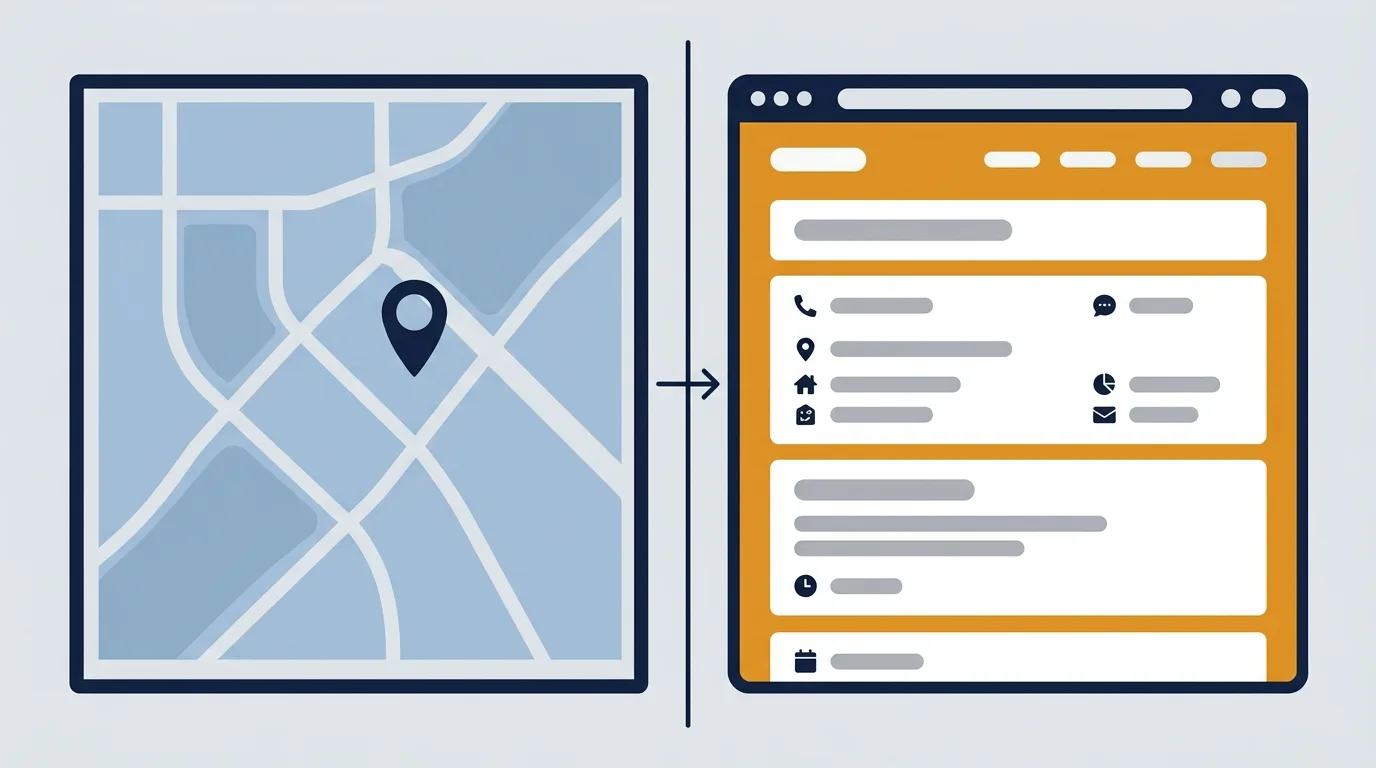
The website is the last place people check after finding you on a map. On the other hand, without a website, you’ll be judged on your review ratings alone. For how you appear in local searches, see What Is MEO? and Local SEO Basics.
Typical Costs
The cost of building a judo therapy clinic website depends on the number of pages and the features. Below are our usual estimates.
| Setup | Number of pages | Typical cost |
|---|---|---|
| Basic setup (3 symptom pages + fees, access, booking) | 6–8 pages | ¥200,000–¥400,000 |
| More symptom pages, built so you can update the site yourself | 10–15 pages | ¥400,000–¥700,000 |
| Includes a booking system and LINE integration | Depends on requirements | From ¥600,000 |
For an overview of website costs, see Website Design Costs. Subsidies for small businesses can sometimes be used toward website costs. Requirements change with each application round, so check Subsidies and Grants for Website Design for our current guidance.
You don’t need pages for every symptom from the start. If you launch with the basic setup and add pages one by one, starting with the symptoms that bring in the most patients, you can keep upfront costs down and grow the site based on how people respond. This approach assumes the site is built so you can add pages yourself later.
Frequently Asked Questions
- I run a seitai (manipulative therapy) clinic. Does this article apply to me?
-
The page structure and booking path work the same way. Fees, however, are handled differently. Seitai isn’t covered by health insurance, so fees should be clearly shown as out of pocket. You also need to be careful about how you describe treatments, depending on whether you hold a professional license.
- Should I start with a website or with flyers?
-
They serve different purposes, so they can’t be compared directly, but only a website reaches people searching by symptom. Flyers help people in your area get to know you, but they won’t reach someone searching “lower back pain [city name].” If flyers already bring in a steady number of patients, your website also works as “the place people check after seeing a flyer.”
- How long should a symptom page be?
-
There’s no set standard for length. A good guide is whether the page covers everything you explain to a patient with that symptom at their first visit. When clinics write out what they actually explain, it usually comes to about 1,500–2,500 Japanese characters.
- Should I hire a photographer?
-
Photos of the clinic, staff, and treatment do affect the booking rate. Even so, the priority is to set up symptoms, fees, and the booking path first. Photos can be swapped out later, but changing the structure later takes more work.
- I want to promote that we handle traffic accident cases. Do I need a dedicated page?
-
Traffic accident cases differ from regular visits both in how people search and in what they want to know (how compulsory automobile liability insurance is handled, transferring from another clinic, the steps required, etc.). If you handle these cases, a separate page is worth creating. Be even more careful with wording here than on other symptom pages.
- Should I be able to update the site myself?
-
Closure notices and fee changes will always come up, so we recommend that you at least be able to update news and fees yourself. How much you’ll be able to edit yourself is something to decide concretely with your web designer before the build starts.
Summary
For judo therapy clinic websites, results depend not on design but on the order of information.
- Patients search by symptom. Create a separate page for each symptom
- Clearly state what health insurance covers. Few sites explain this
- Describe what a visit involves and how long the first visit takes. This is where hesitation goes down
- Offer both phone and online booking, and keep them always visible
- Don’t use wording that guarantees results, and if you’re unsure, check with your public health center or the association you belong to
For our approach to medical websites in general, see also Website Design Guide for Clinics and Medical Practices.
If you already have a website, send us the URL and we’ll point out what’s missing based on the points above. We’re also happy to help you decide whether a rebuild is needed.







