
“When I search for our area name plus our type of business, our website doesn’t show up at all.”
“We registered on Google Maps, but our ranking won’t go up.”
We are getting more and more questions like these from owners of locally rooted businesses.
In fact, there is a specialized approach to Google Search for local businesses called “local SEO.” You need to focus on points that differ from regular SEO (search engine optimization). Put the other way around, if you take the right measures, you have a chance to rank above the websites of large companies.
Local SEO is the work of getting your business to rank high in “area name + business type” searches. Rankings are determined by “relevance, distance, and prominence,” and a complete Google Business Profile and reviews matter most. With the right measures, you have a chance to rank above the websites of large companies.
This article explains local SEO, from how it basically works to specific measures you can take, in a way that people who aren’t familiar with IT can follow.
What Is Local SEO? How It Differs from Regular SEO
How “Local SEO” Works
Local SEO refers to measures that help your business information rank high for search keywords related to a specific area.
For example, it optimizes the results that appear when someone searches for an area name + a business type, such as “Shibuya hair salon” or “Yokohama tax accountant.”
When you search on Google with an area name, a display box with a map called the “Local Pack” appears above the regular search results. The three shops or businesses shown here attract a very large number of clicks. The biggest goal of local SEO is appearing in this Local Pack.
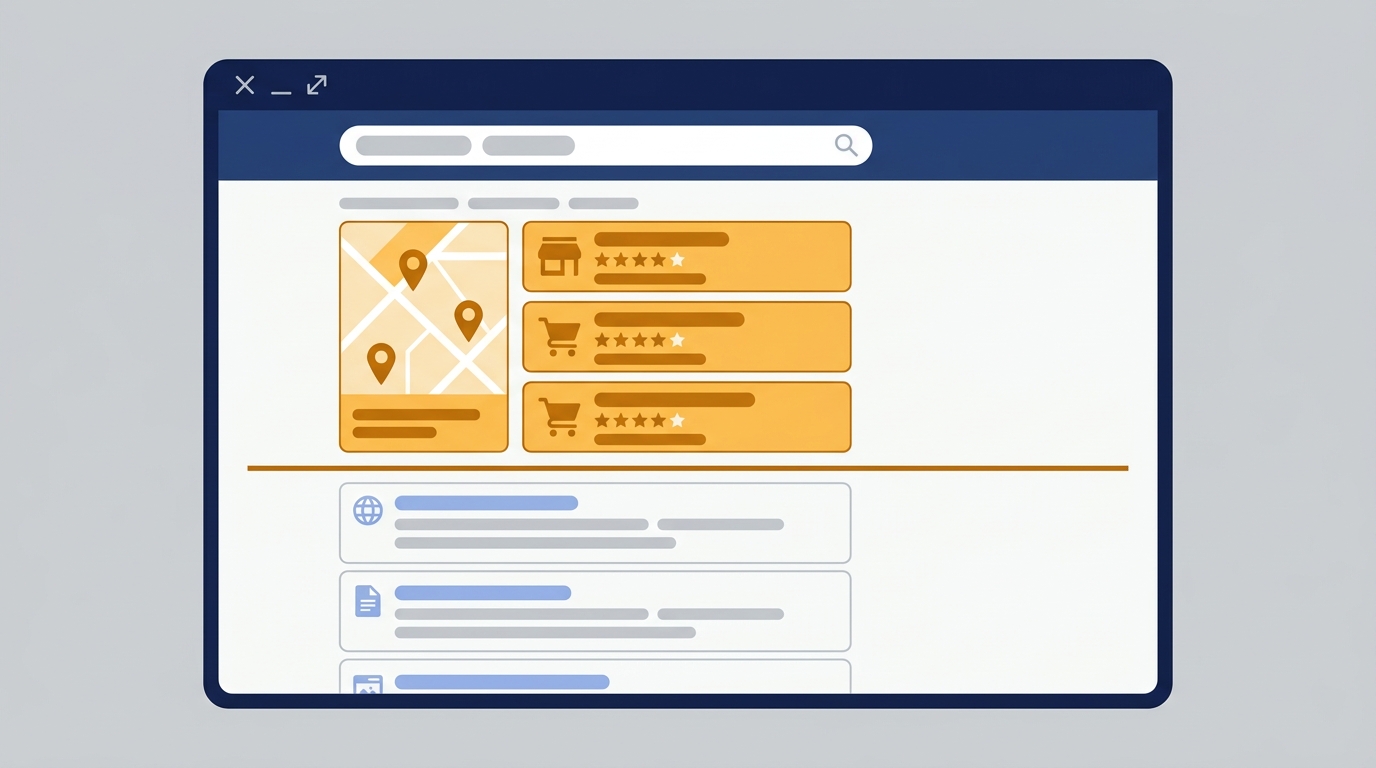
Three Differences from Regular SEO
| Regular SEO | Local SEO | |
|---|---|---|
| Scope | Nationwide or worldwide | A specific area |
| Main place it appears | Regular search results | Local Pack + Google Maps |
| Most important tool | Your website | Google Business Profile |
In regular SEO, large companies and long-established sites have an overwhelming advantage. In local SEO, however, distance from where the search was made and reviews are important factors, so even small and medium-sized local businesses have a real chance of ranking high.
How Does Google Decide Rankings?
According to Google’s official help, local search rankings are determined by three factors.
- Relevance: How well your listing information matches the search keyword
- Distance: The physical distance from the searcher’s location to your shop or office
- Prominence: The number of reviews and their ratings, how much you are mentioned on the web, the number of links, and so on
Of these, “distance” is physical and therefore hard to influence, but “relevance” and “prominence” can be improved significantly depending on what you do.
The First Step: Optimizing Your Google Business Profile
What Is Google Business Profile (GBP)?
Google Business Profile (formerly Google My Business) is a free tool for displaying your business information in Google Search and Google Maps.
To be honest, the most important part of local SEO is optimizing your GBP. Before any other measure, this is where you should start.
Fill In Your Basic Information “100%”
Enter as much of the information in your GBP as you possibly can. The following items are especially important.
- Official business name (your official name, not a nickname)
- Category (set a primary category + additional categories)
- Address (make it match exactly how it’s written on your website and social media)
- Phone number (a local area code is best)
- Business hours (also set public holidays and special business days)
- Website URL
- Business description (up to 750 characters; naturally include your area name and the services you offer)
Add Photos Regularly
According to Google’s research, businesses with many photos get 35% more clicks to their websites than businesses with few photos.
We recommend the following photos.
- The exterior of your shop or office (taken together with a building that serves as a landmark)
- The interior of your shop or office
- Photos of your staff
- Your products or services in action
- Customer testimonials (with permission)
Even 2–3 photos a month is fine. What matters is that Google can tell “this business is actively operating.”
Reviews: The Biggest Differentiator in Local SEO
Why Reviews Matter So Much
Reviews are directly tied to “prominence,” one of Google’s ranking factors. Businesses with more reviews and higher ratings are more likely to rank high in local search.
But the importance of reviews isn’t limited to SEO. There is data showing that about 78% of consumers “trust reviews.” In other words, reviews don’t just raise your ranking; they also help push customers toward deciding “let’s go there.”
Measures to Get More Reviews
If you just wait for reviews to come in naturally, they won’t increase much. Try the following methods.
- Ask after providing your service: Tell customers directly, “If you don’t mind, we’d be happy if you could share your thoughts on Google.”
- Create a QR code for posting reviews: Place it next to the register or on the counter
- Include a review link in your thank-you email: Add a link to your review page in the follow-up email after a transaction is complete
Note: Google’s guidelines prohibit offering monetary rewards for reviews. “We’ll give you a discount if you write a review” is not allowed, so be careful.
Web制作・システム開発は
First CHにお任せください
「こんなWebサイトが欲しい」「このシステムは実現できる?」——
現役エンジニアが直接お話を伺い、最適な進め方をご提案します。
「まだ構想段階」「費用感だけ知りたい」というご相談も歓迎です。
Replying to Reviews Is Important
Google recommends “replying to reviews.” It’s important to reply politely to both good and bad reviews.
Here are the key points for replies.
- Good reviews: Thank the reviewer + mention specific details (so it doesn’t look like a reused template)
- Bad reviews: Don’t get emotional; respond sincerely. Show that you intend to improve
- Reply timing: Within 24–48 hours if possible
Businesses that reply politely to reviews not only earn more trust from customers but also improve how Google evaluates them.
Local SEO on Your Website
Make Your NAP Information Consistent
NAP stands for Name (business name), Address, and Phone (phone number).
In local SEO, it is very important to make your NAP information exactly the same everywhere.
- Your website
- Google Business Profile
- Social media
- Portal sites
- Business cards and brochures
For example, if your website says “東京都渋谷区1-2-3” but your GBP says “渋谷区1丁目2番3号,” Google may take this kind of inconsistency to mean “we can’t tell whether this is the same business.”
Include Local Keywords on Your Pages
Naturally include keywords related to your service area on your website.
- Put your area name in the page title (title element)
- Include your area name in headings (H2 and H3)
- Mention your area name naturally in the body text
- Embed Google Maps on your “Access” page
Don’t overdo it: Stuffing keywords like “Shibuya hair salon Shibuya-ku beauty salon Shibuya Station hair salon” backfires. Always use them in a natural context.
Set Up Structured Data (for Local Businesses)
Structured data is information on your website written in a special format so that Google can understand it accurately.
When you set up structured data for local businesses, you can accurately communicate the following information to Google.
- Type of business
- Address and phone number
- Business hours
- Service area
It requires some technical setup, but if you use WordPress, you can often handle it with a plugin. For details, see “What Is Structured Data (Schema)? Benefits and How to Set It Up.”
Off-Site Measures: Earning Citations and Links
Increase Citations (Mentions Elsewhere)
A citation is when your business information is mentioned on other websites or services.
In local SEO, the quantity and quality of citations affect your ranking. You can increase citations by listing your business information on services like the following.
- Industry portal sites
- Your local chamber of commerce’s website
- Local information sites
- Business accounts on social media
Here too, consistent NAP information is important. Use the same format on every site.
Links from Local Media and Blogs
Getting links from local news sites and blogs is also effective for local SEO.
- Participate in or sponsor local events
- Send press releases to local media
- Join local groups and organizations
Buying links or collecting links from unrelated sites violates Google’s guidelines, so avoid doing so.
Common Mistakes and Things to Watch Out For
Mistake 1: Registering and Then Leaving It Alone
It’s very common for people to feel reassured just by registering on GBP. Local SEO isn’t “register and you’re done”; it requires ongoing management.
At a minimum, do the following once a month.
- Check and update your business hours
- Add new photos
- Reply to reviews
- Publish posts (announcements and campaign information)
Mistake 2: Posting Fake Reviews
Writing reviews of your own business, or asking friends or employees to write them, is a violation of Google’s guidelines. If it’s discovered, you risk not only having the reviews removed but also having your account suspended.
Mistake 3: Creating Multiple GBP Profiles
Creating multiple profiles for the same business is also a guideline violation. The rule is one profile per shop or office.
Summary: Local Businesses Are the Ones Who Should Work on Local SEO
To sum up the basics of local SEO, here are the steps.
- Register on Google Business Profile and fill in your information 100%
- Collect reviews and reply to them politely
- Make the NAP information on your website consistent and include local keywords
- Increase citations and earn local links
- Keep managing it on an ongoing basis
The great thing about local SEO is that you’re not competing with large companies but with similar businesses in your area. If you keep taking the right measures, even small and medium-sized businesses can rank high.
That said, many people say that “keeping up the right measures” is the hard part. It’s only natural that, busy with your core business, you can’t find time to update your GBP or work on SEO.
In my own work supporting clients with local SEO, I’ve seen many cases where setting up structured data on the website and designing content with local keywords in mind were especially effective.
If you’re thinking, “I want to start local SEO on our website, but I don’t know where to begin,” feel free to contact us.
Web制作・システム開発は
First CHにお任せください
「こんなWebサイトが欲しい」「このシステムは実現できる?」——
現役エンジニアが直接お話を伺い、最適な進め方をご提案します。
「まだ構想段階」「費用感だけ知りたい」というご相談も歓迎です。







