
“I don’t know what to put on my seitai clinic’s website.”
“I want to post client testimonials, but I’m worried whether that’s legally okay.”
We often hear concerns like these from owners of seitai and manual therapy clinics.
Building a website for a seitai or manual therapy clinic involves specific points to watch that differ from those for restaurants or hair salons. In particular, you can’t afford to overlook the Medical Advertising Guidelines: violating them unknowingly could lead to administrative guidance from the authorities.
To be honest, for a seitai or manual therapy clinic website, “trustworthiness” is everything. Because clients will receive treatment that involves physical contact, they judge very carefully whether “this practitioner can really be trusted.”
In this article, we explain in detail the structure and essential content of a seitai or manual therapy clinic website that earns clients’ trust, including how to stay mindful of the Medical Advertising Guidelines.
For a seitai or manual therapy clinic website, “trustworthiness” is everything. The shortest path to attracting clients is to have all five elements in place — treatment details, pricing, a clinic director profile, client testimonials, and access information — and to design the site so it removes clients’ worries one by one. At the same time, you must not use expressions that guarantee results, such as “guaranteed to cure,” because they conflict with the Medical Advertising Guidelines and related rules.
5 Essential Types of Content for a Seitai or Manual Therapy Clinic Website
1. Treatment Page: Make Clear “What You Will Do for Me”
What clients want to know most is “what kind of treatment can I receive at this clinic?”
Elements needed on the treatment page:
- A list of the symptoms you address: stiff shoulders, lower back pain, headaches, posture correction, postpartum pelvic correction, etc.
- An explanation of each treatment: in plain language, without technical jargon
- The treatment flow: the steps from arrival to the end of treatment (ideally with photos)
- Approximate treatment time: e.g., 60 minutes for the first visit, 40 minutes from the second visit onward
- Who it’s for: the kinds of people you recommend it to
Be careful how you use technical terms. “Myofascial release,” “trigger points,” “chiropractic” — terms like these may be second nature to practitioners, but they mean nothing to clients. Always add a supplementary explanation in plain language.
Example: “Myofascial release (a treatment that loosens the membrane surrounding the muscles to help your body move more smoothly)”
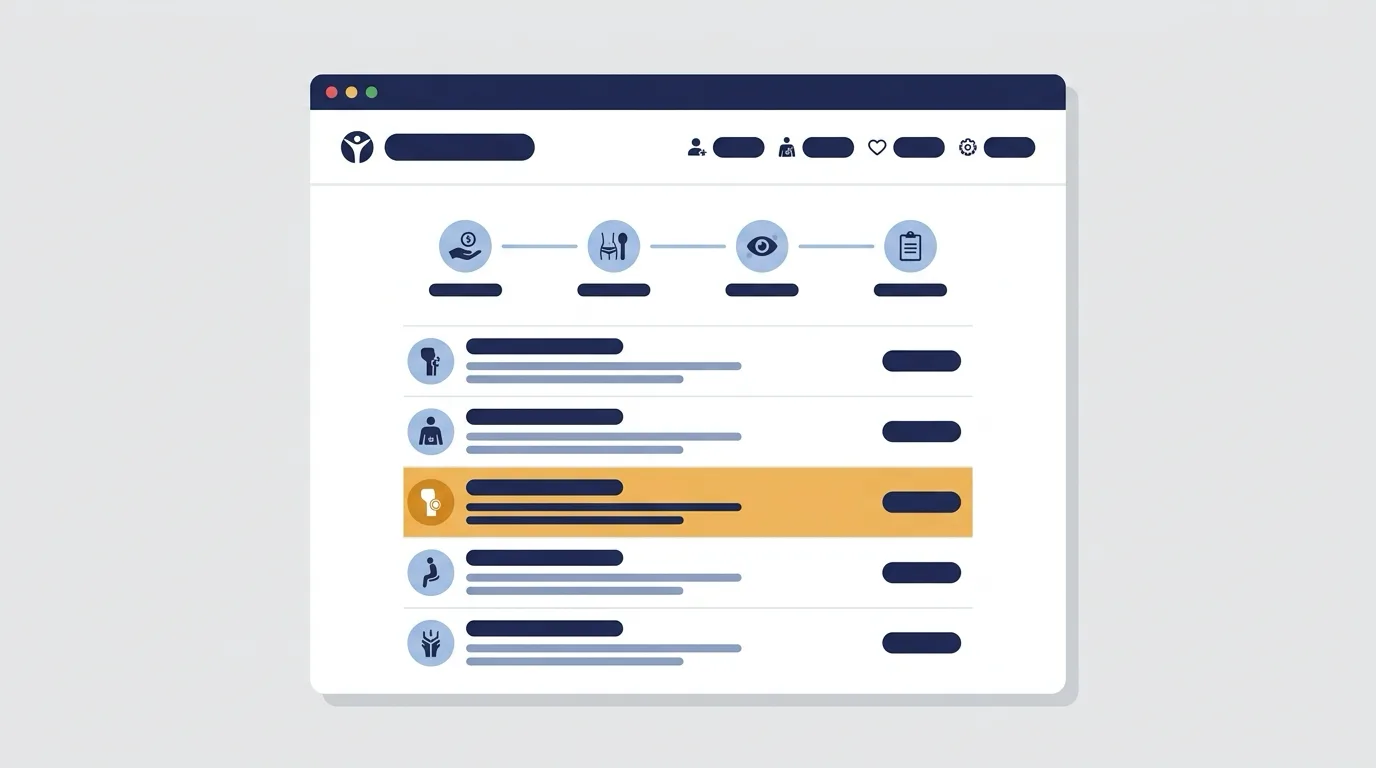
2. Pricing Page: Transparency That Removes Worry
On seitai and manual therapy clinic websites, one of the points with the highest abandonment rate (where people close the page) is “unclear pricing.”
Key points for the pricing page:
| Information to include | Reason |
|---|---|
| Price for each treatment menu | Makes clear what costs how much |
| First-visit price and price from the second visit onward | The first visit often includes an assessment fee, so show them separately |
| Prices for multi-visit tickets and courses | Makes it easier to estimate long-term costs |
| Whether insurance applies | For judo therapy clinics (seikotsuin/sekkotsuin), clearly state which menus are covered by insurance |
| Whether there are additional charges | Removes the worry that “they’ll charge me extra later” |
Speaking frankly as a web designer, a website that doesn’t list prices has already lost the client at that point. With “We’ll explain prices when you visit,” clients feel too uneasy to book.
3. Clinic Director Profile Page: Make Visitors Think “I’d Feel Safe With This Practitioner”
Seitai and manual therapy clinics are businesses chosen based on “the person.” In particular, the clinic director’s personality and background are the most important deciding factors for clients.
Information to include on the clinic director profile page:
- A photo of your face: a bright, smiling photo in your treatment uniform (professional photography recommended)
- Qualifications held: judo therapist, acupuncturist and moxibustion practitioner, anma massage and shiatsu practitioner, etc.
- Background: education, training history, how you came to open the clinic
- Your thoughts and philosophy on treatment: why you do this work
- A personal side: hobbies and interests to create a sense of familiarity
To be honest, the quality of the face photo on the clinic director profile page greatly shapes the impression of the entire clinic. Dark or out-of-focus photos make people feel “uneasy.” Use a bright photo that gives a clean impression.

4. Client Testimonials Page: Reinforce Trust With Third-Party Evaluations
Client testimonials (patient testimonials) are an extremely powerful tool for building trust as evaluations from third parties.
However, for seitai and manual therapy clinics, you need to be mindful of the Medical Advertising Guidelines (explained in detail later).
Key points for posting client testimonials:
- Posting photos of handwritten questionnaires increases credibility
- Include the client’s age group, gender, and the concern they came in with (keep personal information hidden)
- Post the concern before treatment and the change after treatment as a set
- Add new testimonials regularly (if there are only old ones, people will wonder “Is it still good these days?”)
- Also include a link to your Google reviews
Note that when posting client testimonials, always obtain the person’s consent. We recommend preparing a written consent form.
5. Access Page: So Clients Can Arrive Without Getting Lost
| Information to include | Notes |
|---|---|
| Address (with postal code) | As text that’s easy to copy |
| Embedded Google Map | Essential. Lets clients open navigation right away |
| Directions from the nearest station | Ideally with photos along the way |
| Parking information | Number of spaces, location, nearby coin parking |
| Phone number | With a link that dials when tapped |
| Business hours and regular closing days | In an easy-to-read table |
| Photo of the exterior | So people can tell “this building is the landmark” |
Seitai and manual therapy clinics are often located in residential areas or in a room inside a building, so first-time clients may have trouble finding them. Exterior photos and route photos may seem unremarkable, but they are an important element in lowering the barrier to visiting.
Web制作・システム開発は
First CHにお任せください
「こんなWebサイトが欲しい」「このシステムは実現できる?」——
現役エンジニアが直接お話を伺い、最適な進め方をご提案します。
「まだ構想段階」「費用感だけ知りたい」というご相談も歓迎です。
Being Mindful of the Medical Advertising Guidelines: Dangerous If You Don’t Know
Advertising Regulations That Also Apply to Seitai and Manual Therapy Clinics
You may think, “We’re not a medical institution, so this doesn’t concern us, right?” But treatment facilities opened by judo therapists, acupuncturists and moxibustion practitioners, or anma massage and shiatsu practitioners are subject to legal advertising regulations.
Also, even seitai clinics (treatment facilities without national qualifications) are subject to the Act against Unjustifiable Premiums and Misleading Representations (which prohibits exaggerated advertising) and the Pharmaceuticals and Medical Devices Act (formerly the Pharmaceutical Affairs Act).
Expressions You Must Not Write on Your Website
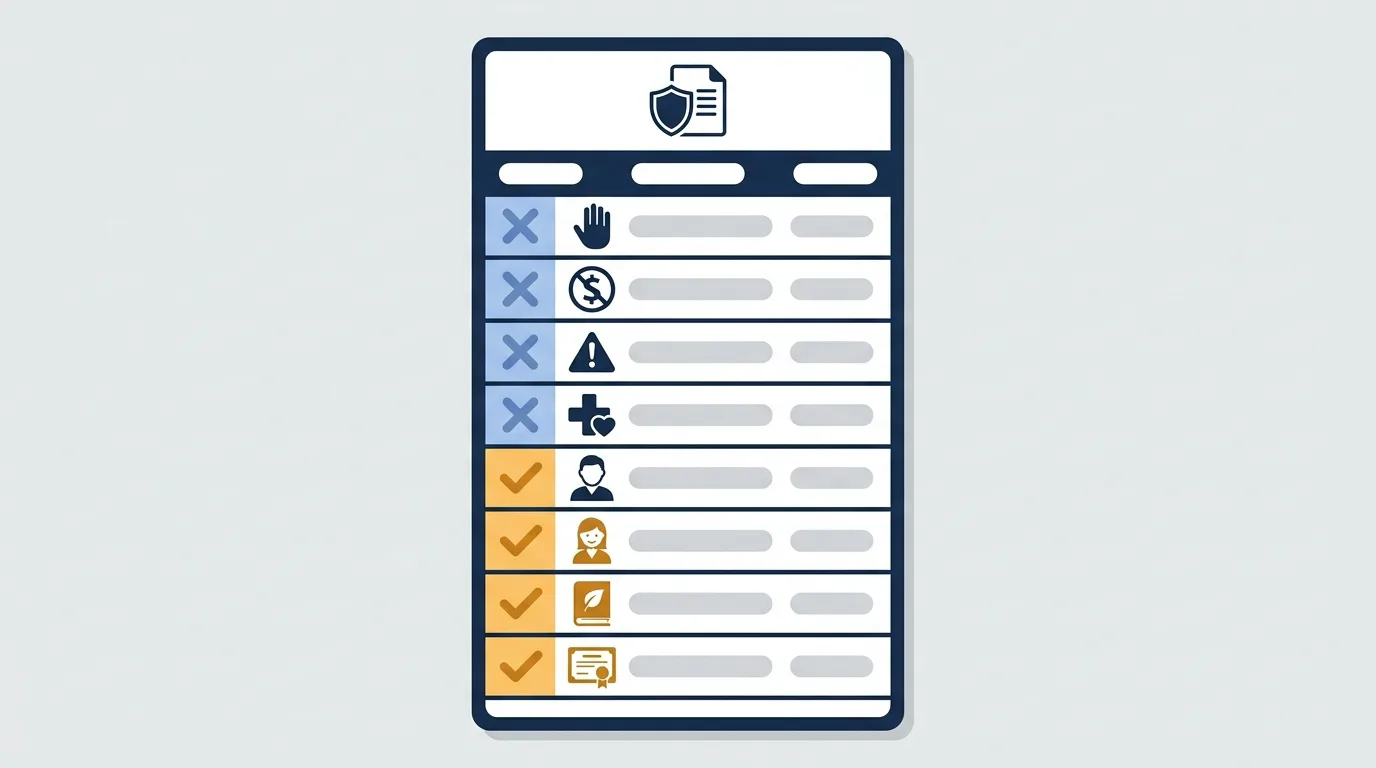
| Prohibited expression | Reason | Acceptable alternative |
|---|---|---|
| “Guaranteed to cure,” “Will definitely improve” | Expressions that guarantee results are prohibited | “Many clients have felt an improvement” |
| “Even symptoms other clinics couldn’t cure, we can” | Comparisons with other treatment facilities are prohibited | “We address a wide range of symptoms” |
| Calling your work “medical treatment” (chiryō) or saying you “cure” people (naosu) (without a medical license) | Expressions that could be mistaken for medical practice | “Hands-on treatment” (sejutsu), “care,” “support” |
| “Effective for ○○ disease” (a specific disease name) | Implies medical practice | “For those troubled by ○○” |
| Before-and-after photos (conditional) | May be taken as guaranteeing results | Post together with an explanation of the treatment |
Care Is Also Needed When Posting Client Testimonials
In client testimonials, expressions that state results definitively, such as “My pain completely disappeared” or “I was cured in 3 sessions,” may conflict with the guidelines.
Countermeasures:
- Always add a note to client testimonials stating, “These are individual impressions and do not guarantee results”
- Avoid posting testimonials that include specific symptom names or definitive claims of curative effects
- Keep to expressions like “I feel more comfortable” or “I’d like to keep coming”
To be honest, these rules have many gray areas and can be difficult to judge. If you’re unsure, we recommend checking with your local public health center before publishing your website.
Design Points for a Trusted Clinic Website
“Cleanliness” and “Reassurance” Come First
The most important things in the website design of a seitai or manual therapy clinic are cleanliness and reassurance. It’s a place where people receive treatment involving physical contact, so a website that looks unclean or makes people uneasy is fatal.
Design direction:
- A clean color scheme based on white
- Plenty of white space, without cramming in too much information
- Use many photos of the clinic director and staff smiling
- Include photos of a bright, clean clinic interior
- Use an easy-to-read sans-serif (gothic) typeface (serif (mincho) typefaces tend to feel stiff)
Create a “For First-Time Visitors” Page
Clients going to a seitai or manual therapy clinic for the first time carry the worry of “not knowing what will be done to me.” To remove this worry, we strongly recommend creating a “For First-Time Visitors” page.
What to include:
- What to bring: a change of clothes, your health insurance card (if needed), etc.
- The flow from arrival to the end of treatment: in a step format with photos
- Time required: e.g., 90 minutes for the first visit, 60 minutes from the second visit onward
- Clothing advice: e.g., please come in clothes that are easy to move in
- Frequently asked questions (FAQ): whether it hurts, how many visits are needed, etc.

Symptom-Specific Pages Strengthen SEO
“Area name + stiff shoulders,” “area name + lower back pain” — clients who search with keywords like these are “highly motivated people” who want treatment right away.
By creating an individual page for each symptom, you can match these searches.
Examples:
- “For Those Troubled by Stiff Shoulders”
- “For Those Troubled by Lower Back Pain”
- “For Those Troubled by Headaches”
- “For Those Considering Postpartum Pelvic Correction”
On each page, include the causes of that symptom, your clinic’s treatment approach, the treatment flow, and client testimonials. Creating one page per symptom makes it easier to earn higher evaluations from search engines.
Cost Estimates for a Seitai or Manual Therapy Clinic Website
Estimated Production Costs
| Who you hire | Estimated cost | Estimated number of pages |
|---|---|---|
| Web production company | ¥500,000–¥1,500,000 | 10–20 pages |
| Freelancer | ¥150,000–¥500,000 | 5–10 pages |
| Template-based service | ¥0 to ¥10,000/month | Limited |
To be honest, seitai and manual therapy clinic websites tend to have many pages once symptom-specific pages are included. A realistic approach is to start with the 5 essential pages plus 3–5 pages for your main symptoms, then gradually add more symptom-specific pages.
When hiring a freelancer, the going rate is ¥250,000–¥450,000 for about 8–10 pages.
Estimated Maintenance Costs
| Item | Monthly cost |
|---|---|
| Server fees | ¥1,000–¥2,000 |
| Domain fees | ¥100–¥300 per month equivalent |
| Maintenance fees (if outsourced) | ¥3,000–¥10,000 |
If the site is built with WordPress, you can post announcements and add client testimonials yourself.
3 Integrated Measures to Strengthen Client Acquisition
Measure 1. Integrating With Google Business Profile
For seitai and manual therapy clinics, Google Business Profile (GBP) is the most important free tool for attracting clients.
When someone searches “area name + seitai,” a box of business listings appears together with Google Maps (the local pack). Appearing there is the most effective way to attract local clients.
Register your own website’s URL in GBP, and make your business hours, address, and phone number match your website exactly (consistent NAP information).
Measure 2. Encouraging and Managing Reviews
Google reviews affect your GBP ranking. Set up a system for asking clients who visit to post a review.
- Hand out a QR code for posting a review after treatment
- Send a message via LINE asking clients to post a review
- Always reply to reviews (both positive and negative ones)
Measure 3. Sharing Information Through a Blog
By regularly posting blog articles that match search keywords such as “stiff shoulders causes” or “lower back pain stretches,” you can increase touchpoints with new clients.
Specialized content that only a practitioner can write is valuable information for clients, and at the same time it gives the impression that “this practitioner knows their stuff and can be trusted.”

Summary: What Makes a Clinic Website Trusted
| Point | Specific measures |
|---|---|
| Treatment details | Avoid jargon and use plain language. Show the treatment flow with photos |
| Pricing | List prices for all menus. Also state whether there are additional charges |
| Clinic director profile | Post a professionally taken face photo, qualifications, background, and philosophy |
| Client testimonials | Post photos of handwritten questionnaires, with a disclaimer note |
| Medical Advertising Guidelines | Avoid guaranteeing results and comparative advertising. Use “care” instead of “cure” |
| Design | Cleanliness and reassurance come first. Create a page for first-time visitors |
| SEO | Create symptom-specific pages and share information through a blog |
For a seitai or manual therapy clinic website, a design that “removes clients’ worries one by one” is essential. Clients can see what the treatment involves, see the prices, see the practitioner’s face, and see that others go there too. Only when all of this is in place can clients decide, “I’ll give this place a try.”
“I want to build a new website for my seitai clinic.” “I want to improve my current website and attract more clients.” Please feel free to contact us first. We’ll propose the website structure best suited to your clinic’s strengths and clientele, including how to stay mindful of the Medical Advertising Guidelines.
Web制作・システム開発は
First CHにお任せください
「こんなWebサイトが欲しい」「このシステムは実現できる?」——
現役エンジニアが直接お話を伺い、最適な進め方をご提案します。
「まだ構想段階」「費用感だけ知りたい」というご相談も歓迎です。







