“Does a small company like ours really need a website?”
“Isn’t social media or Google Maps enough?”
We often get questions like these from small business owners.
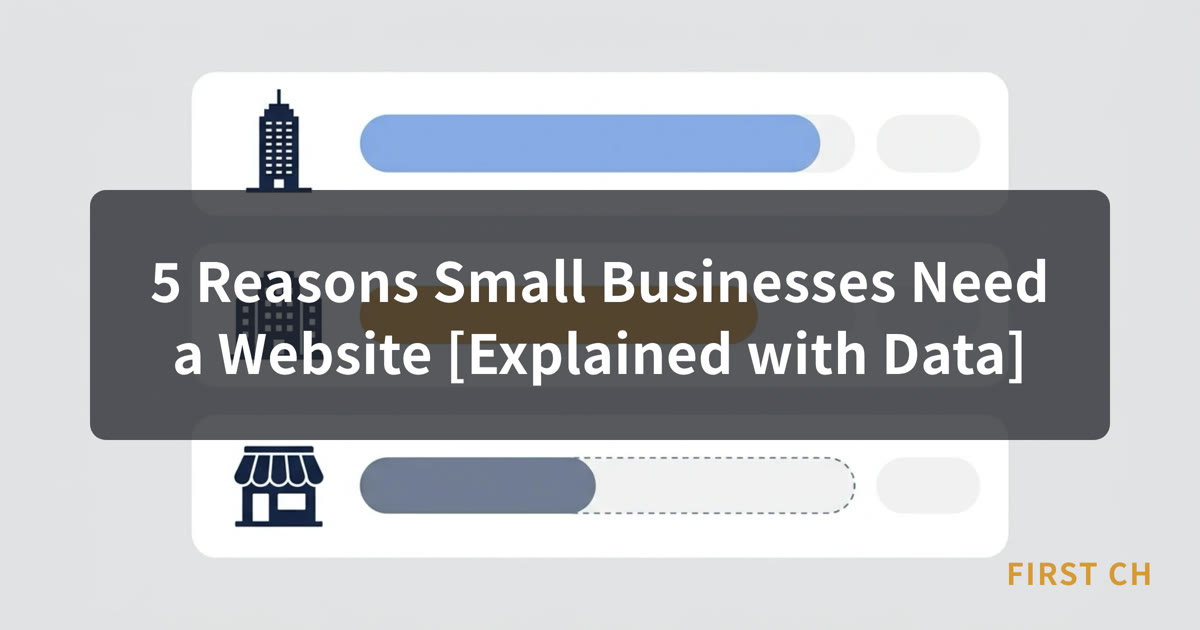
We understand how you feel. When you’re busy running a business and have no time or money to spare for a website, deciding not to build one is a rational choice. In fact, the website adoption rate among small businesses is 46.3% (according to the Small and Medium Enterprise Agency). More than half of small businesses currently have no website.
The data shows that many businesses are losing out without realizing it because they don’t have a website. As of 2026, a website is not a “nice-to-have.” It is basic business infrastructure.
In this article, we use statistical data to explain five reasons small businesses need a website. We put it together so you can decide based on numbers, not on emotion.
First, the Current Situation | Website Adoption Among Small Businesses and Consumer Behavior
Website Adoption Rate by Company Size
| Company size | Website adoption rate |
|---|---|
| Large companies (300+ employees) | 93.0% |
| Medium-sized companies (100–299 employees) | 80.4% |
| Small businesses (20 or fewer employees) | 46.3% |
Sources: Ministry of Internal Affairs and Communications, “Communications Usage Trend Survey (2023)”; Small and Medium Enterprise Agency
Nearly all large companies have a website, while more than half of small businesses do not.
Be careful here: “Half of them don’t have one, so it’s fine not to” is the wrong conclusion. Looked at the other way, about half of your competitors already have a website. Not having one puts you at a disadvantage against that half.
Consumers Now “Search First”
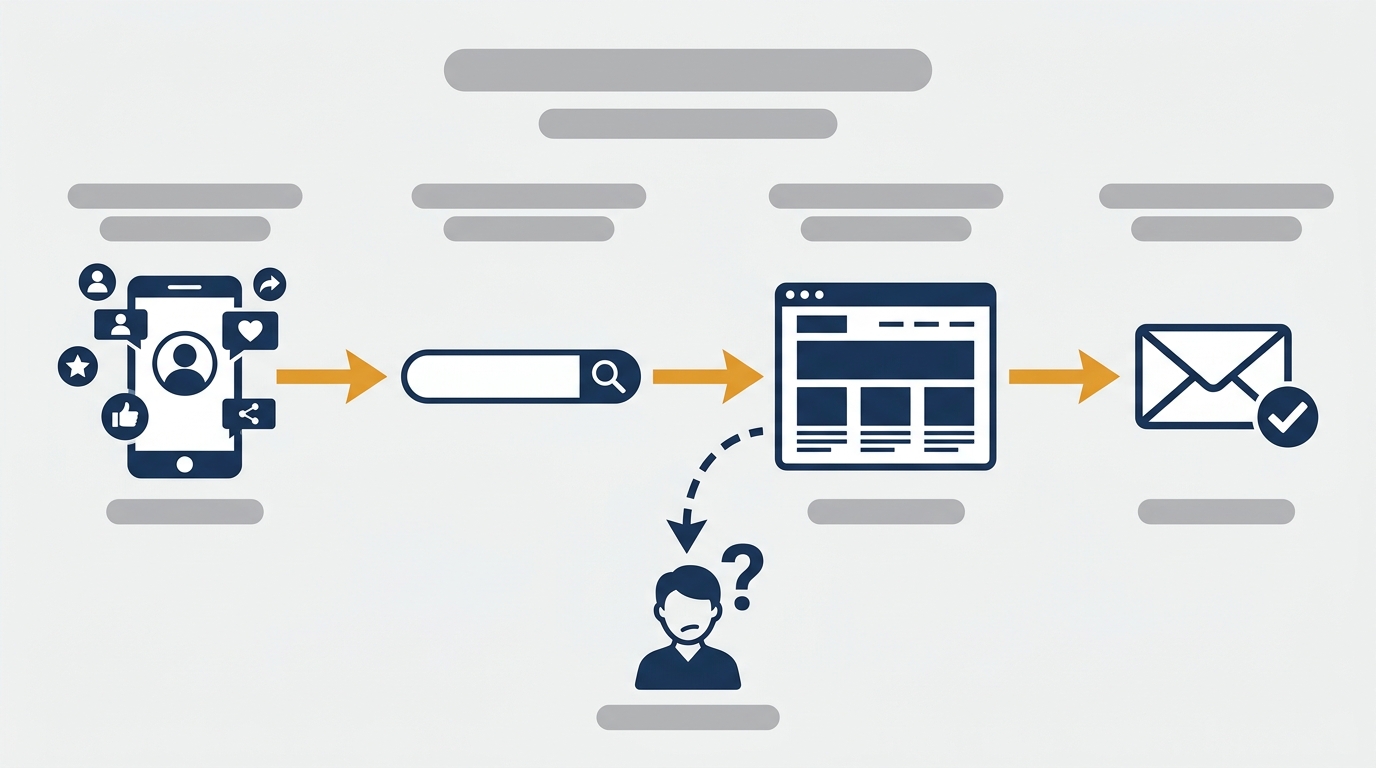
The top way consumers look for information before buying or using a product or service is search engines (46.6%) (Allied Architects, “UGC Impact Survey 2022”).
In other words, about half of the people interested in your company’s services start by searching on Google. If they can’t find your website at that moment, they go straight to the competitors that show up in the search results.
5 Reasons Small Businesses Need a Website
Reason 1. People Don’t Trust a Company They Can’t Find in Search
To be honest, this is the biggest reason.
Put yourself in the customer’s shoes. When you find a shop or service you’re interested in, don’t you search for the company name on your phone first? If no website came up, how would you feel?
- “Does this company really exist?”
- “Is this a legitimate company?”
- “Is it safe to hire them?”
Individual customers are not the only ones who feel this way. Business partners also routinely check the other company’s website before starting a new business relationship. In bank loan reviews, a company’s website is sometimes referred to as one source of credit information.
A website has become a basic “company ID card,” just as fundamental as a business card.
Reason 2. Provide Information and Accept Inquiries Automatically, 24 Hours a Day, 365 Days a Year
A website is a sales tool that keeps working on holidays and late at night.
For example, are there questions customers often ask you by phone?
- “What time do you close?”
- “How much does it cost?”
- “What services do you offer?”
- “Is there parking?”
It’s not unusual for answering these questions one call at a time to take 30 minutes to an hour per day. That works out to 10–20 hours a month.
If you put this information on your website, customers can check it themselves. You’ll spend less time on the phone, and owners and staff can use their time for their core work.
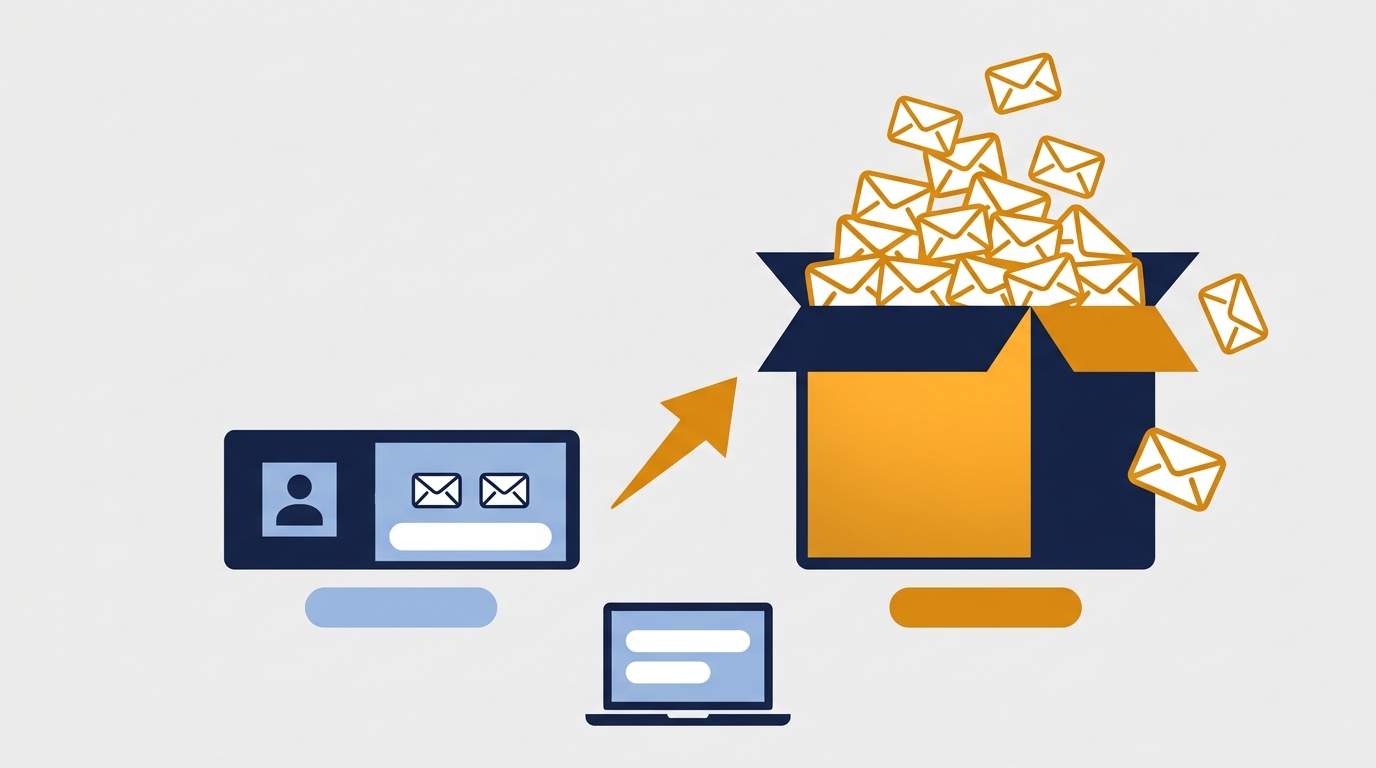
On top of that, if you add an inquiry form, you can accept inquiries outside business hours. “I found them in a search at night and was interested, but I forgot by the time I could call.” You can prevent lost opportunities like this.
Reason 3. “Stock-Type” Customer Acquisition That Social Media Alone Can’t Provide
“We’re getting customers through Instagram, so we’re fine.” Many people think this way. Getting results from social media is great.
However, social media and websites play different roles.
| Comparison | Social media (Instagram, etc.) | Website |
|---|---|---|
| Lifespan of information | Buried within hours to days | Found through search for years |
| Type of information | Flow-type (new posts keep scrolling past) | Stock-type (accumulates and becomes an asset) |
| Visibility in search engines | Generally hard to surface | Can aim for top rankings in Google Search |
| Organization of information | Past posts are hard to find | Can be organized with menus and categories |
| Platform risk | Risk of terms changes and account suspension | Managed by your company, no risk |
| Credibility | Casual impression | Highly credible as official information |
Social media is excellent as an entry point for “getting known.” But relying on social media alone carries risks.
Social media is another company’s service. An algorithm change can suddenly slash your reach (the number of people who see your posts), and a terms change can get your account suspended. In fact, quite a few businesses have seen their post reach drop significantly after past Instagram algorithm changes, which hurt their customer acquisition.
Changes in the age of AI search: Since 2025, Google has been fully rolling out AI Overviews (AI search). In AI search, website content is cited and shown in the search results. If you have no website, you won’t appear in AI search results either.
The smartest strategy is to have both social media and a website. Get known through social media, help people understand you in detail on your website, and turn that into inquiries. This flow is the most effective.
Web制作・システム開発は
First CHにお任せください
「こんなWebサイトが欲しい」「このシステムは実現できる?」——
現役エンジニアが直接お話を伺い、最適な進め方をご提案します。
「まだ構想段階」「費用感だけ知りたい」というご相談も歓迎です。
Reason 4. It Changes Your Recruiting Power: The First Thing Job Seekers Look At Is Your Website
For small businesses, securing staff is a major management challenge. Here too, a website plays an important role.
According to a survey by ONE Inc., 83% of job seekers check a company’s website before applying. Furthermore, in a 2024 survey by baigie, 60.99% of job seekers had looked at the recruitment site of the company they decided to join.
In other words, to job seekers, a company without a website is “a company that’s hard to apply to because there isn’t enough information.”
Younger generations in particular tend to put more weight on gathering information online. If your website shows your company’s atmosphere, work environment, and employee voices, you can convey appeal that job ads alone can’t get across.
Another big advantage is that job ads disappear when their listing period ends, but recruitment information on your website can stay published at all times. Compared with the cost of listing on job sites (about ¥100,000–¥500,000 per listing), a website is far more cost-efficient over the long term.
Reason 5. You Can Make Business Decisions Based on Data
Having a website brings a surprisingly little-known benefit: traffic data.
If you set up Google Analytics (a free analytics tool), you can learn the following:
- How many people visit your site (monthly traffic)
- Which regions your traffic comes from (understanding your trade area)
- Which pages are viewed most (what customers care about)
- Where your traffic comes from (search, social media, QR codes on flyers, etc.)
- Which days and times get the most traffic (customer behavior patterns)
For example, if the data shows “the pricing page gets a lot of traffic, but there are few inquiries,” you can decide to improve how you present your prices. If you put a QR code on your flyers, you can also measure the effectiveness of your flyers.
Without a website, you can’t get any of this data. Being able to make business decisions based on data rather than gut feeling is a major benefit of having a website.
The “Hidden Disadvantages” Small Businesses Without a Website Suffer
Customers Are Going Straight to Your Competitors
Someone interested in your company’s services searches on Google. But they can’t find your company’s website. Instead, competitors that have websites show up in the search results.
There’s a high chance that person will contact one of those competitors.
This isn’t a case of “a customer being stolen.” Your company was never on their list of options in the first place. Hidden lost opportunities are frightening precisely because you don’t notice them.
The Danger of Having No Accurate Information Online
Even without a website, information about your company may exist online. Google Maps reviews, mentions on social media, listings on industry portal sites: this is information you can’t control.
Some of it may include an old address, a wrong phone number, or incorrect business hours. A negative review may be the first thing people see.
A website is the only place where you can control your own “official information.” Publishing accurate information yourself is also important for protecting trust.
Lost Inquiry Opportunities: Estimating the Annual Loss
Let’s think about it with concrete numbers.
Suppose 20 people a month search online for your company’s services (a realistic number for a local small business).
| Item | Value |
|---|---|
| Monthly searchers | 20 people |
| Share who would visit if you had a website | 50% (10 people) |
| Share of visitors who make an inquiry | 5% (0.5 people ≒ 1 inquiry every 2 months) |
| Additional inquiries per year | About 6 |
| Sales per inquiry | Assume ¥100,000 |
| Annual lost opportunity | About ¥600,000 |
Of course, these are hypothetical numbers, but there is a real possibility that not having a website is costing you several hundred thousand yen in sales per year. If a website costs ¥300,000–¥500,000 to build, the math says you’d recoup the investment within a year.
“We Don’t Need a Website”: Answering 3 Objections
“Social media brings us enough customers”
As mentioned above, social media and websites play different roles. Social media is a tool for “getting known,” while a website is a tool for “earning trust and helping people learn more.”
If social media is already bringing you customers, adding a website is likely to raise your inquiry conversion rate. That’s because people who became interested through social media can check more detailed information on your official site.
Also, there is always the risk that your social media account suddenly becomes unusable. A website is your company’s own asset and can be maintained without being affected by any platform.
“Building one costs too much”
We understand that the cost of building a website is a major hurdle. However, when you compare total annual costs, a website is often more cost-effective than other advertising methods.
| Advertising method | Annual cost | How long the effect lasts |
|---|---|---|
| Newspaper insert flyers (once a month) | About ¥600,000–¥1,200,000 | Distribution day only |
| Search (listing) ads | About ¥360,000–¥1,200,000 | Only while you pay for ads |
| Free paper listings | About ¥240,000–¥600,000 | That issue only |
| Website | ¥300,000–¥500,000 in the first year, ¥20,000–¥60,000 per year from the second year | Lasts for years |
Once built, a website keeps bringing in customers 24 hours a day for years, which makes it the most cost-effective investment over the long term.
In addition, using the Small Business Sustainability Subsidy (up to ¥500,000, or up to ¥2,000,000 depending on conditions) or the IT Introduction Subsidy may reduce your actual out-of-pocket cost even further.
“No one will look at it even if we build one”
“We built a website, but nobody visits it.” This can certainly happen. However, that’s a problem with how the website was built and run, not a reason websites themselves are unnecessary.
There are several ways to get people to see it:
- SEO: Measures to rank higher in search results
- Linking with Google Business Profile: Appear in local search and Google Maps
- Paths from social media: Include your website URL in your posts
- Put the URL on business cards and flyers: Paths from offline
Especially for local businesses, simply registering your website URL in Google Business Profile (formerly Google My Business) can bring in traffic from local search and Google Maps.
Also, attracting customers isn’t a website’s only value. Securing credibility, improving recruiting power, and streamlining operations (fewer phone inquiries) are benefits you get just by having a website, regardless of how much traffic it gets.
Web制作・システム開発は
First CHにお任せください
「こんなWebサイトが欲しい」「このシステムは実現できる?」——
現役エンジニアが直接お話を伺い、最適な進め方をご提案します。
「まだ構想段階」「費用感だけ知りたい」というご相談も歓迎です。
Sometimes a Website Isn’t Necessary: Making an Honest Judgment
Does every company need a website? To be honest, there are cases where it’s a low priority.
When a Website Is a Low Priority
- Your business is entirely referral-based and you don’t need any new customers
- You already have enough customers and don’t want any more orders
- You plan to scale down or close the business
However, even if one of the above applies to you, a website has “insurance value.” Credibility with business partners and financial institutions, being ready for a sudden need to hire, countering misinformation on review sites: you get these just by having a website.
Does Your Company Need a Website? 5 Criteria
If two or more of the following apply, having a website will benefit you significantly.
- You want more new customers
- Customers have asked you, “Do you have a website?”
- Your competitors have websites
- You plan to recruit in the future
- Handling phone inquiries is taking up your time
The First Step | The Simplest Way for a Small Business to Get a Website
Starting with 5 Pages Is Enough
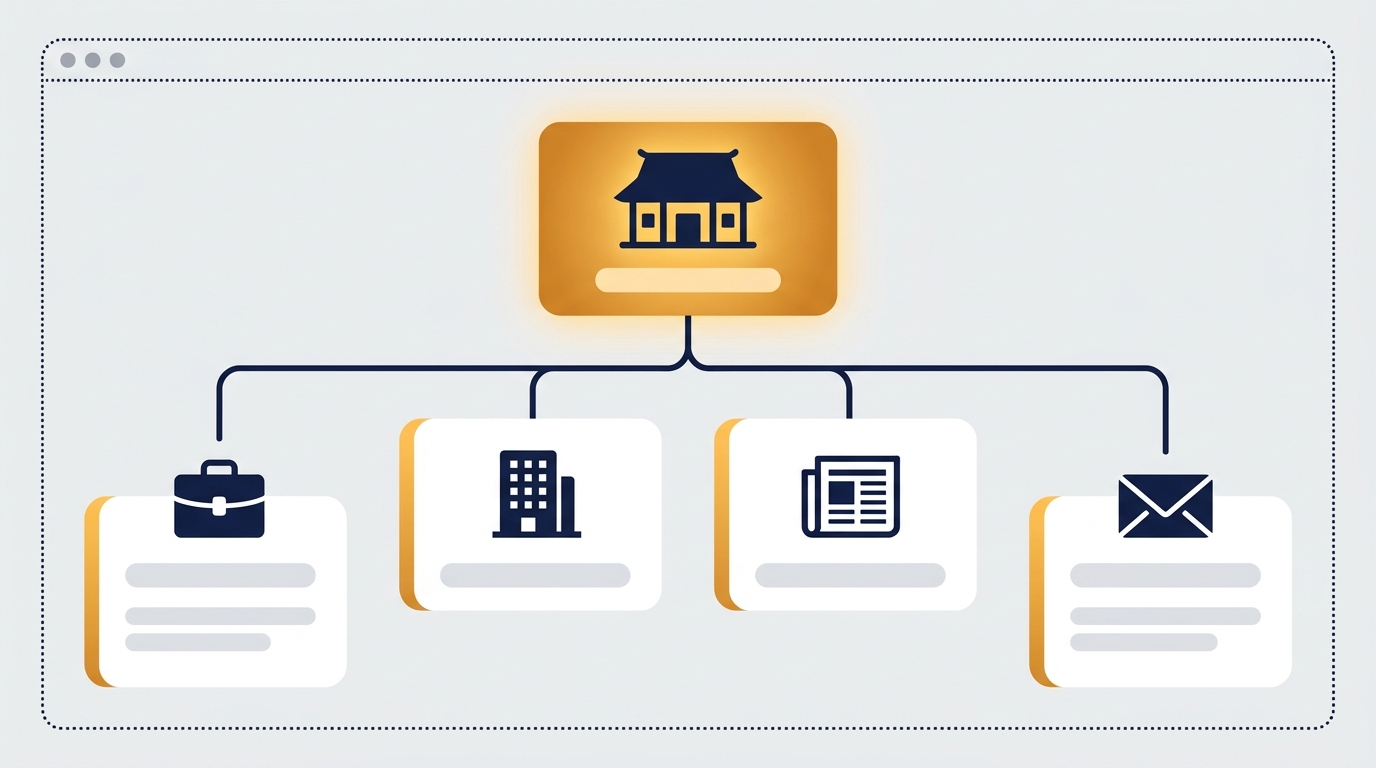
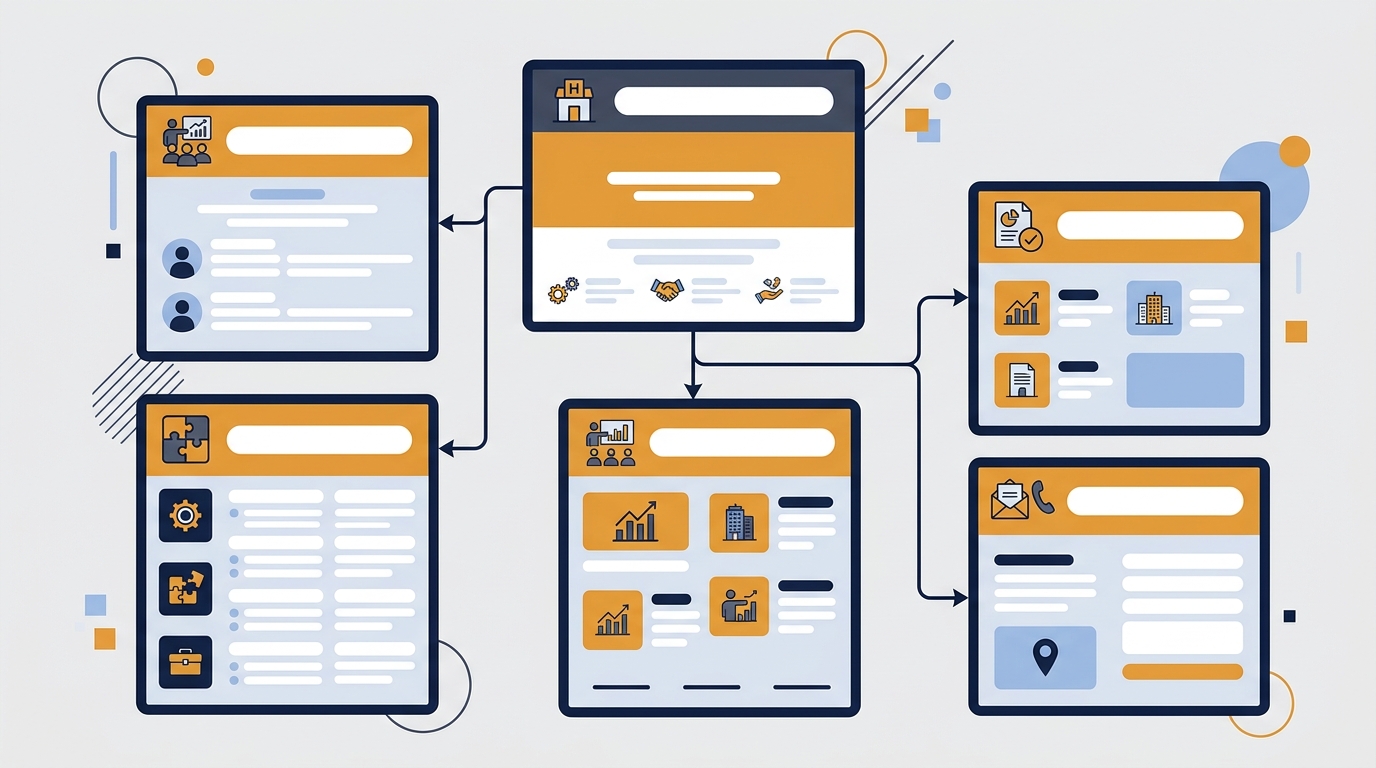
You don’t need to build a large website from the start. The minimum a small business needs is the following 5 pages:
- Home page: An overview of the company and the full picture of your services
- Services: Details of the services you offer
- Company profile: Location, representative, year founded, contact information
- News: A place to post updates
- Contact: A form or contact details
With these 5 pages, you can fulfill the minimum functions of an “official site.” Starting simple and adding pages as you see results is the most cost-effective approach.
Cost: You Can Start from ¥100,000
If you hire a freelancer, a simple corporate site of about 5 pages can be built for about ¥100,000–¥300,000.
If you customize a template, you can keep costs even lower. What matters is not aiming for perfection, but first getting to the point where your site “exists.”
Running Costs Start at ¥1,000 per Month
The minimum cost of maintaining a website is server fees of about ¥1,000–¥2,000 per month. That’s only about ¥10,000–¥20,000 per year. Compared with printing business cards or phone directory ads, it’s by no means an expensive investment.
If your site is built with WordPress, you can update the blog and add news yourself. You don’t need to ask the developer every time.
Summary: The Data Shows “A Website Is Infrastructure for Small Businesses”
| Reason | Key point |
|---|---|
| Reason 1. Credibility | Companies without a website now get their existence questioned. Business partners and financial institutions check too |
| Reason 2. Operational efficiency | Provide information and accept inquiries 24 hours a day, cutting the cost of handling phone calls |
| Reason 3. Stock-type customer acquisition | Social media posts flow away, but a website accumulates as an asset. Also ready for AI search |
| Reason 4. Recruiting power | 83% of job seekers check the website. Also directly reduces recruiting costs |
| Reason 5. Using data | Traffic analysis lets you make business decisions based on data instead of gut feeling |
As of 2026, a website is not a “nice-to-have.” It is business infrastructure. Like a phone or email, it has become something “everyone is expected to have.”
Of course, simply building a website won’t produce results. A design that fits your goals, the right technology choices, and operation after launch: only when all of these come together does a website contribute to your business.
“Does our company really need a website?” “How much would it cost to get started?” Please feel free to contact us. After hearing about your business situation, we’ll give you an honest answer, including whether you really need one at all.
Web制作・システム開発は
First CHにお任せください
「こんなWebサイトが欲しい」「このシステムは実現できる?」——
現役エンジニアが直接お話を伺い、最適な進め方をご提案します。
「まだ構想段階」「費用感だけ知りたい」というご相談も歓迎です。