
When you choose a web development company, you may see claims like “This company specializes in WordPress” or “This company is strong in Next.js.”
Specialization is a good thing, but sometimes it makes me a little uneasy. That’s because there are quite a few cases where projects are driven by the technology first.
“We specialize in WordPress, so we’ll build it with WordPress.”
“Next.js is the mainstream these days, so let’s go with Next.js.”
Is that really the right approach?
In this article, I’ll explain why First CH insists on choosing the right technology for each project, how I think about it, and what benefits it brings to clients.
Technology is a means, not an end. First CH starts from the client’s business and goals, and chooses the technology that best fits the project. I often end up choosing WordPress, but that is the best answer reached after weighing the options. When choosing a web development company, check whether they can explain “why that technology.”
What Happens When Projects Are Driven by Technology First
The Pitfall of WordPress-Only
To avoid any misunderstanding, let me say this first: WordPress is an excellent platform. It is used by more than 40% of websites worldwide, and it is often the best choice for the corporate websites of small and medium-sized businesses.
However, that does not mean WordPress is the best fit for every project.
For example, consider cases like these:
- For a company whose site is updated extremely rarely, a full-featured WordPress setup is overkill
- For a service site where page speed directly affects sales, another technology may be better suited
- For projects with strict security requirements, the risks of a dynamic CMS should be considered
If you hire a WordPress-only development company, even in these cases the proposal tends to be “We’ll handle it with WordPress.” This is not a question of the company’s technical skill, but a structural problem of having limited options.
The Pitfall of Latest-Technology-Only
On the other hand, you also need to be careful with development companies that say, “We use modern technologies like Next.js and React.”
To be honest, Next.js is an excellent technology, but in most cases it is overkill for a typical corporate website of a small or medium-sized business.
- Development costs are often 1.5 to 2 times or more those of WordPress
- In some cases, updating the site requires an engineer’s involvement
- Operating costs tend to be higher
“Using the latest technology” makes good marketing for a development company, but it is not necessarily a benefit for the client.

How I Approach Technology Selection
The Starting Point Is the Client’s Business, Not the Technology
When I take on a project, the first thing I think about is not technology.
What I think about first are questions like these:
- Who will visit this site? (target users)
- What results are expected? (inquiries, store visits, recruitment, etc.)
- Who will update the site? (Is there someone in-house who is familiar with it?)
- What are the budget and timeline?
- Are there plans to expand the site in the future?
My approach is to listen carefully to all of this and then choose the technology that best fits the project.
My Actual Decision Criteria
Specifically, which technology do I choose in which situations? Here are my decision criteria.
When I choose WordPress (+ SWELL)
- Corporate websites for small and medium-sized businesses (the most common pattern)
- You want to update a blog or news section regularly in-house
- You want to keep development costs down
- You want solid SEO
- You are likely to add or change pages in the future
When I choose Next.js (React)
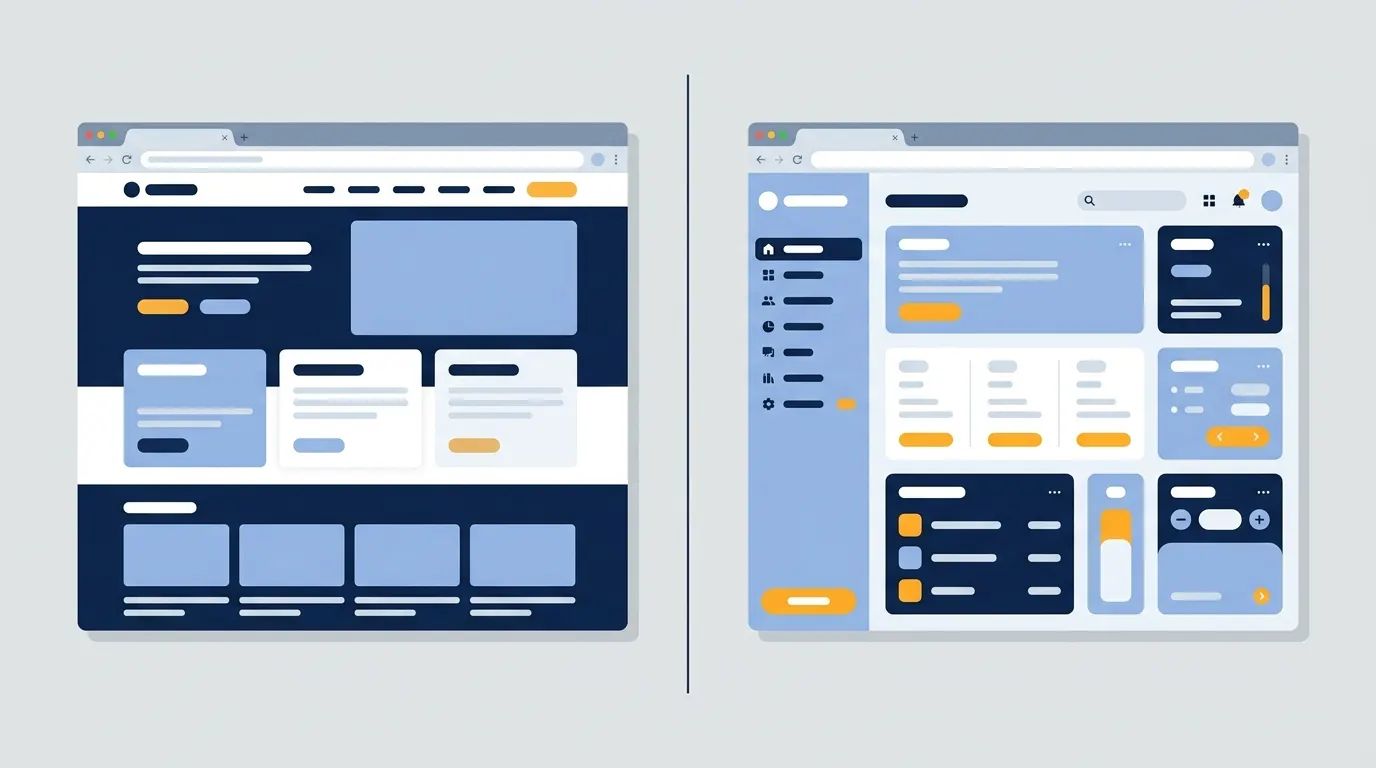
- Service sites where page speed directly affects sales
- Web applications that handle large amounts of data
- Sites that require advanced UI/UX (ease of use)
- Cases where a headless CMS (a setup that separates the admin interface from the front-end display) is a good fit
When I choose a static site (HTML/CSS only)
- Few pages and extremely infrequent updates
- You want to launch a site quickly at minimal cost
- Single pages such as landing pages (LPs)
As a Result, WordPress Comes Up Most Often
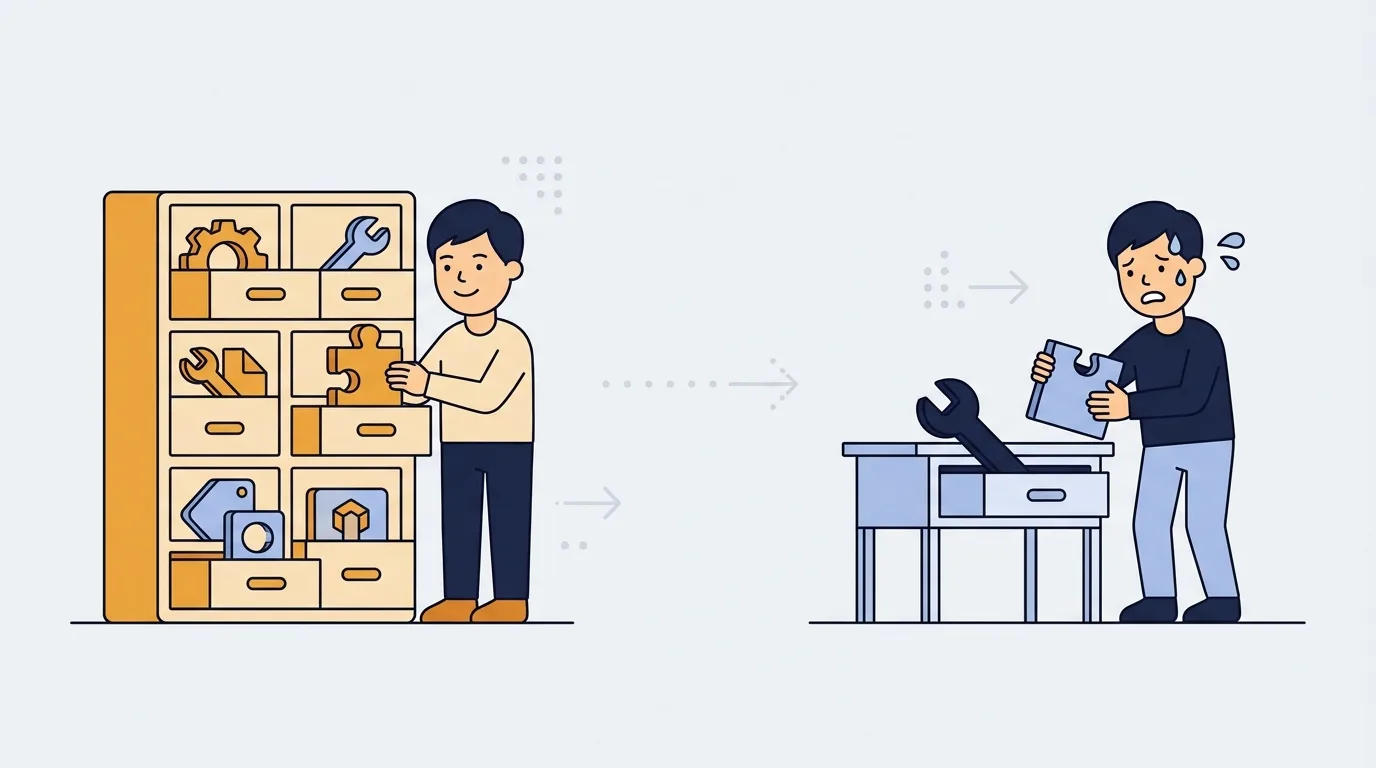
To be honest, when I select technology using these criteria, WordPress ends up being the most common choice.
That’s not because I’m a WordPress devotee, but because WordPress offers the most balanced fit for the purpose of a small or medium-sized business’s corporate website.
- Reasonable development costs
- Can be updated in-house
- Strong for SEO
- Functionality can be extended with plugins
- A large track record, which gives peace of mind
However, “can only handle it with WordPress” and “choosing WordPress because it is the best fit” mean completely different things. I am committed to choosing the best answer while having other options available.
What Are the Benefits of a Wide Technical Toolkit?
Three Benefits for Clients
There are three main benefits of working with “a developer with a wide technical toolkit.”
Benefit 1: You can avoid overinvesting
It prevents situations like “It was a simple corporate website, but advanced technology was used and the development cost ballooned.”
Choosing the best technology for the project means building a site with exactly the specifications needed, at a reasonable cost. Excessive technology leads to excessive cost.
Benefit 2: You can adapt to future changes
As your business grows, the functions your site needs will also change.
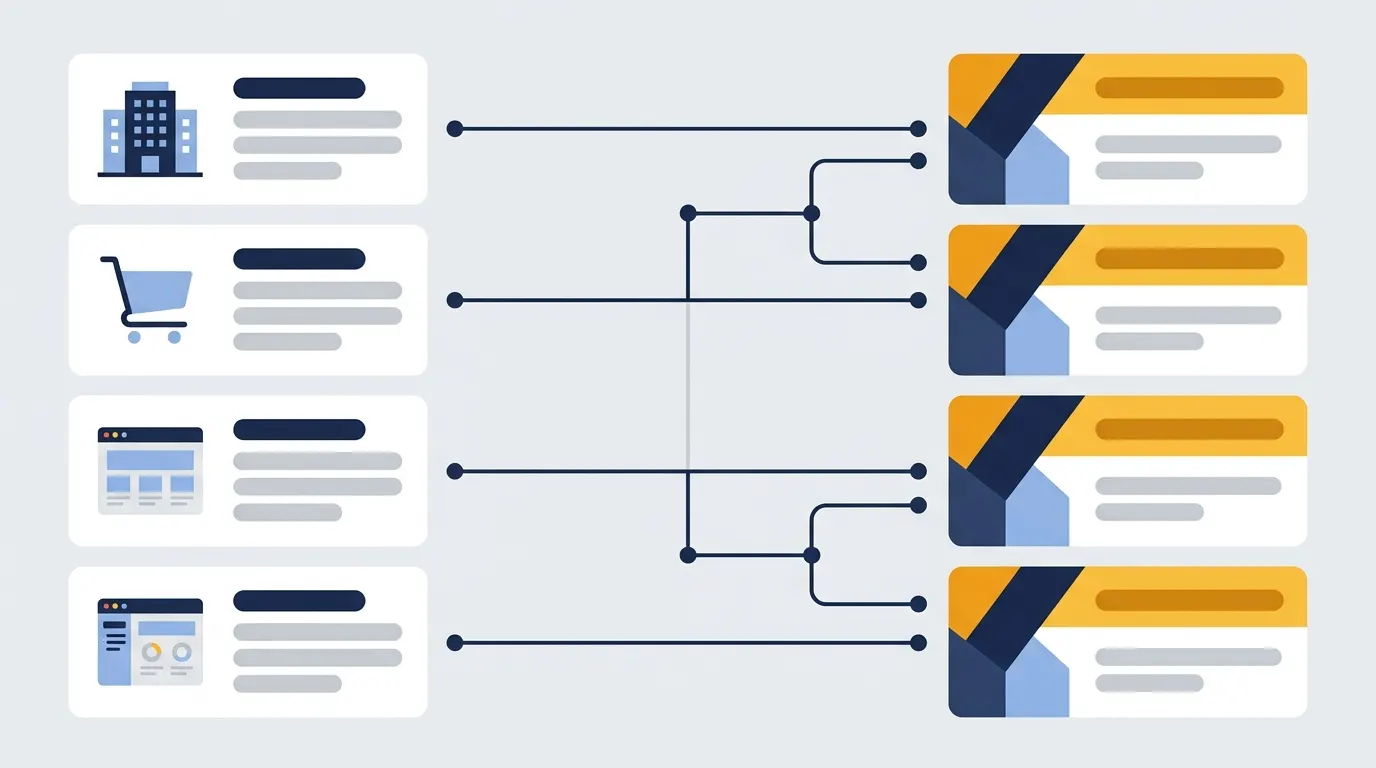
For example, “At first a WordPress corporate site was enough, but as the business expanded we needed a web application.” A developer with a wide technical toolkit can handle changes like this consistently.
Benefit 3: You get impartial advice
Developers who can only work with a specific technology inevitably tend to push the technology they know how to use.
By contrast, developers who can work with multiple technologies can give impartial advice that puts the client’s interests first. Being able to say “WordPress is the best fit for this project” as well as “Next.js is better suited for this project”: that neutrality is what serves the client’s interests.
Web制作・システム開発は
First CHにお任せください
「こんなWebサイトが欲しい」「このシステムは実現できる?」——
現役エンジニアが直接お話を伺い、最適な進め方をご提案します。
「まだ構想段階」「費用感だけ知りたい」というご相談も歓迎です。
“Can Handle Any Technology” Is Different from “Half-Baked in Every Technology”
A Common Concern
“If you dabble in so many technologies, aren’t you half-baked in all of them?”
You might think that. To be honest, I think that concern is entirely reasonable. In fact, working with many technologies on shallow knowledge is dangerous.
A Realistic Breakdown of My Skills
To avoid misunderstanding, let me be candid.
WordPress / SWELL
Our own company site is also built and run on WordPress + SWELL, and I can handle everything from theme customization and plugin development to security measures. For small and medium-sized business corporate websites, this is where I have the largest track record.
Next.js / React
I have experience building dynamic web applications and sites that use a headless CMS. I use it on projects that require both performance and SEO.
Common foundation
HTML, CSS, JavaScript, PHP, Git, server setup: it is precisely because I have this foundational knowledge of web technology that I can work across different frameworks. What supports the quality of my work is that I build with an understanding of how things work, not just surface-level operation.
How to Avoid Mistakes in Technology Selection
Points Clients Should Watch For
When consulting a web development company, I recommend checking the following points.
1. Do they explain “why they use that technology”?
Choose a developer who explains specifically why that technology is the best fit for your project, rather than saying “Because we specialize in WordPress” or “Because Next.js is popular.”
2. Do they present other options?
A developer who makes proposals after comparing options, saying something like “Method A is also possible, but in this case B is better suited, because…”, is trustworthy.
3. Do their proposals take operations into account?
A website isn’t finished once it’s built. Whether they make proposals that consider “who will update the site, and how, after it’s built” is a very important point.
Summary | Not the “Best Technology” but the “Right Technology”
Here is a summary of what I wanted to convey in this article.
- “WordPress specialist,” “Next.js advocate”: technology-first development carries risks
- The starting point for technology selection should be the client’s business and goals
- A developer with a wide technical toolkit can prevent overinvestment and give impartial advice
- The ideal is not “broad and shallow” but “handling multiple technologies on a deep understanding of the foundation”
I hold to this philosophy because I want to deliver what clients truly need.
There are many excellent technologies in the world. However, technology is a means, not an end. What matters is choosing the best means for your business. That is why I will keep a wide range of technologies in my toolkit.
If you have questions like “What technology suits our company?” or “I’m not sure whether our current development company’s proposal is appropriate,” feel free to get in touch. I’ll provide careful support, starting from technology selection.
Web制作・システム開発は
First CHにお任せください
「こんなWebサイトが欲しい」「このシステムは実現できる?」——
現役エンジニアが直接お話を伺い、最適な進め方をご提案します。
「まだ構想段階」「費用感だけ知りたい」というご相談も歓迎です。







