
“If we have social media, do we even need a website?”
“Let’s start with Instagram first and build a website once we have some room.”
We often hear comments like these from owners of small businesses.
It’s true that social media is free to start and makes it easy to share information. A website, on the other hand, costs money to build and takes time to complete. It’s only natural to be unsure which one to prioritize.
To give you the conclusion up front: what a small business should set up first is a website. Then you supplement it with social media. This order is the most effective strategy.
In this article, we explain the reasons in detail, based on data and real examples.
What a small business should set up first is a website; social media is an accelerator you add on top of it afterward. Social media is powerful for spreading awareness, but posts flow by and disappear, and they can’t capture customers who are looking for services through search. Only once you have a website to receive them do “discover → research → inquire” connect into one continuous flow.
Websites and Social Media Play Fundamentally Different “Roles”
A Website Is “Stock” Media; Social Media Is “Flow” Media
First, let’s understand the biggest difference between a website and social media.
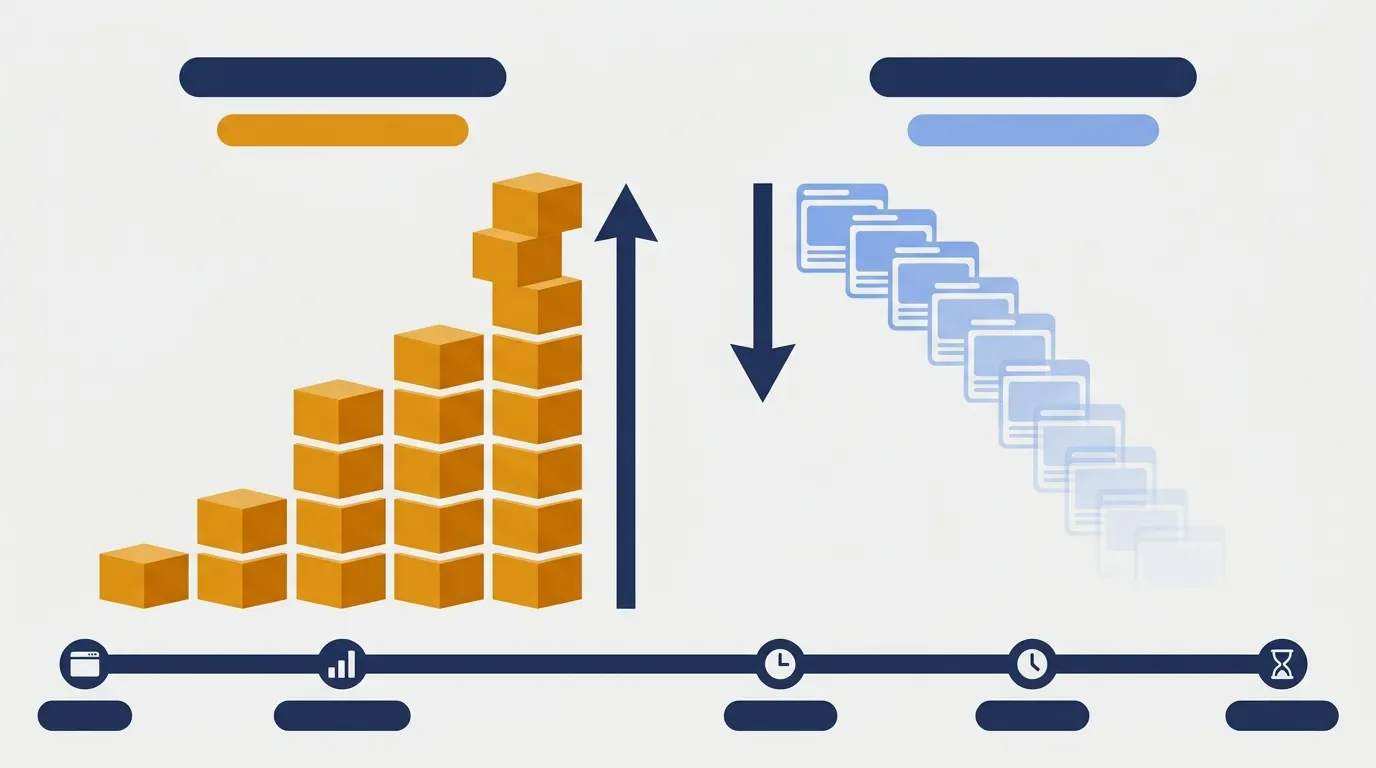
Website = stock media
Content (pages) you create once accumulates and keeps drawing visitors from Google search even as time passes. As long as the information doesn’t go out of date, it builds up as an asset.
Social media = flow media
Information you post flows down the timeline and gets buried over time. It has strong immediate impact, but past posts rarely attract visitors.
An Easy Analogy
A website is “a shop on the ground floor of your own building.” It has a fixed address and a sign, and anyone who comes during business hours can always get information.
Social media is “flyers handed out on the street.” They catch the eye of people walking by, but they don’t reach anyone who didn’t take one. And the flyers you hand out get thrown away over time.
It’s not that one is good and the other bad; their roles are different.
Because their roles are different, the question of choosing only one of them misses the point. It becomes easier to decide when you treat it as a question of order.
Differences in Comprehensiveness and Credibility of Information
There is one more important difference.
Website
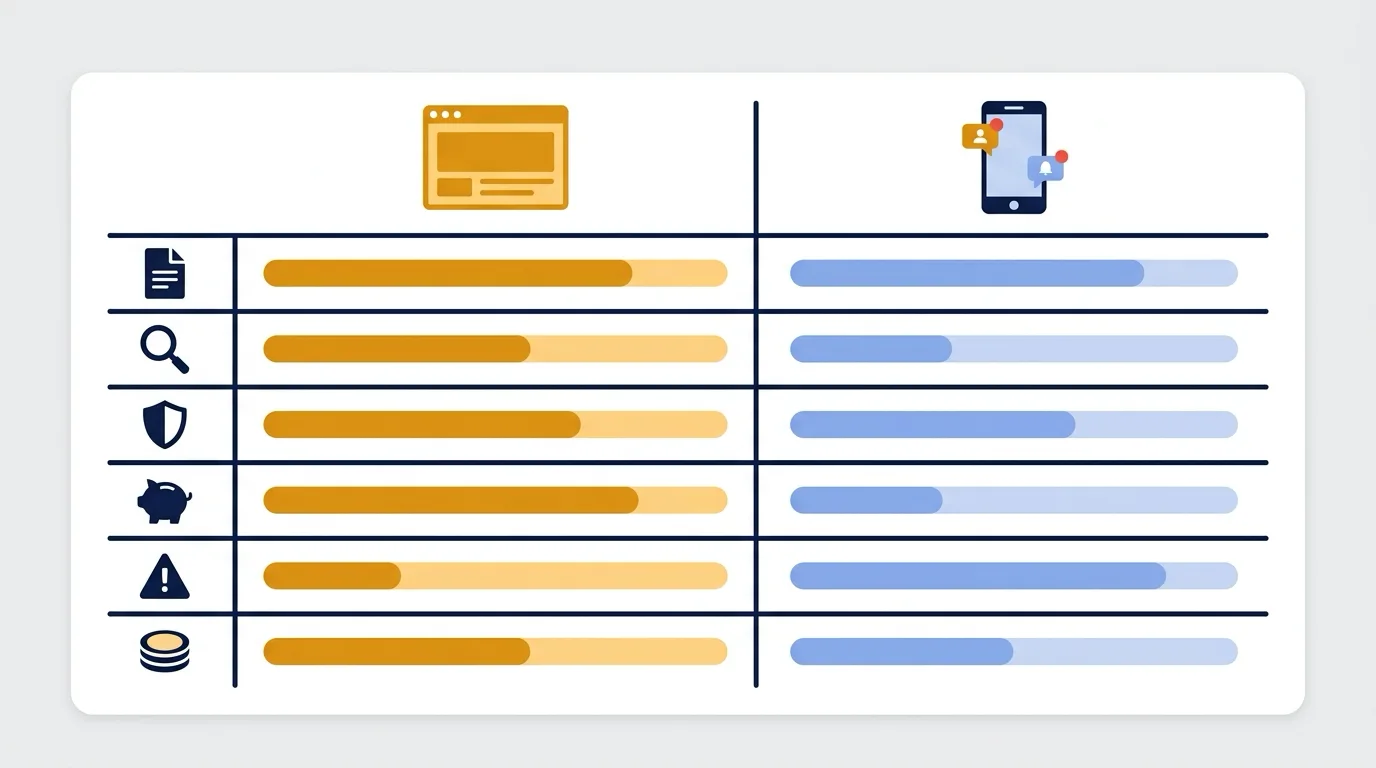
- You can publish a large amount of information in an organized way: company overview, services, pricing, track record, staff introductions, recruitment information
- It’s easy to lead to action from prospective customers through an inquiry form
- A custom domain (such as ○○.co.jp) gives it high credibility
Social media
- There’s a limit to how much information fits in one post
- You’re at the mercy of platform specification changes
- There’s a risk of losing everything if your account is suspended
What the Data Says About the Importance of a Website
About 80% of Business Owners Say “Companies with a Website Are More Trustworthy”
In a survey of 1,127 owners of small businesses with fewer than 50 employees, 79.8% answered “yes” to the question “Do you think companies with a website are more trustworthy?”
In other words, if your business partners and prospective customers search for your company name and no official website comes up, they are likely to wonder, “Is this company okay?”
The Consumer Behavior Pattern: Discover on Social Media → Confirm on the Website
Today’s consumer behavior follows a clear pattern.
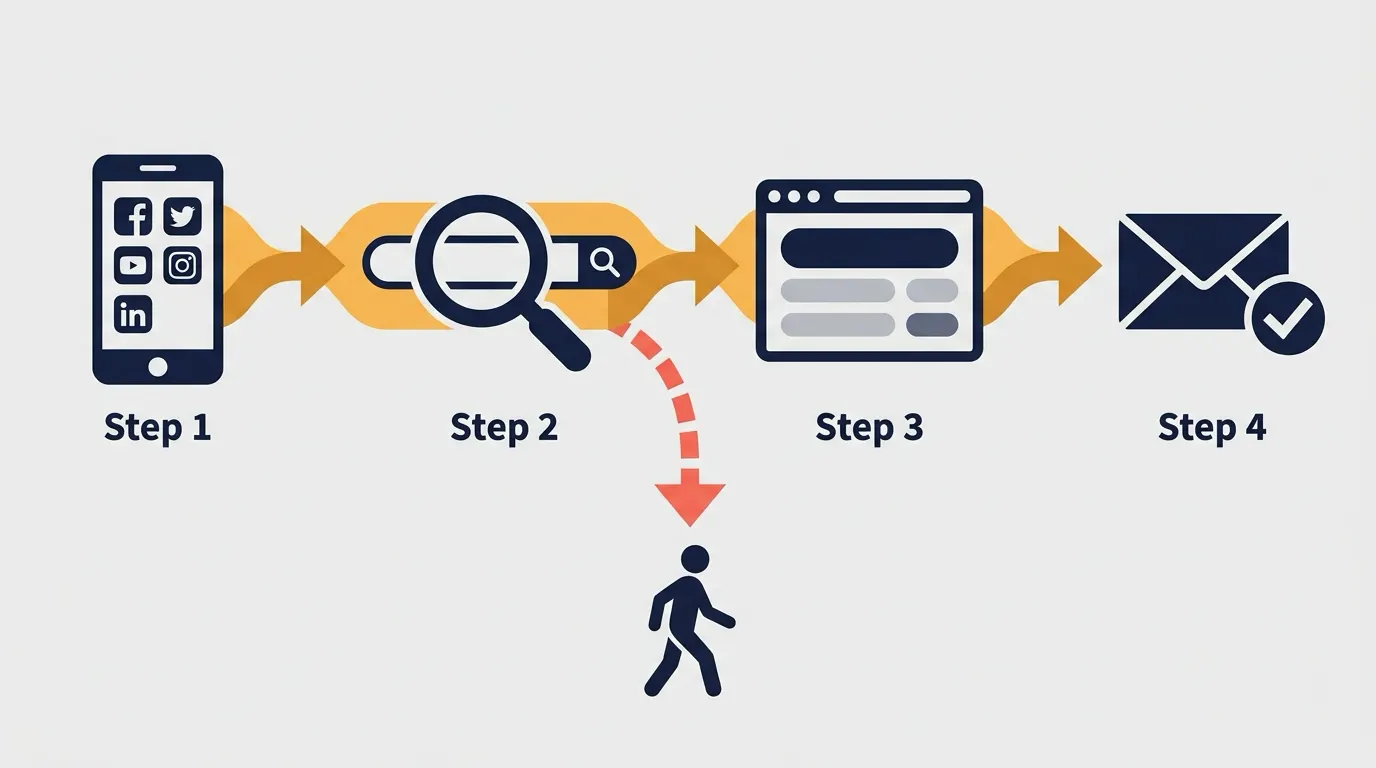
- Discover the company or product through social media or word of mouth (awareness)
- Search for the company name on Google (confirmation)
- View detailed information on the website (consideration)
- Make an inquiry or purchase (action)
What matters in this pattern is step 2, the “Google search.” When a customer who became interested through social media searches for your company name and no website comes up, they drop off right there.
In other words, if you try to attract customers through social media alone without a website to receive them, you will “miss” some of them.
Customers who searched, couldn’t find you, and left don’t appear in your social media engagement or your site analytics. Because the loss continues unseen, the biggest problem is that nothing prompts you to notice it.
In B2B, a Website Is Especially Essential
For business-to-business (B2B) companies, a website matters even more.
People at companies evaluating potential business partners almost always check the other company’s website. Without information such as a company overview, track record, and details about the representative, there are cases where credit checks or internal approvals don’t go through.
To be honest, in B2B business, “social media alone is enough” is almost never the case.
Web制作・システム開発は
First CHにお任せください
「こんなWebサイトが欲しい」「このシステムは実現できる?」——
現役エンジニアが直接お話を伺い、最適な進め方をご提案します。
「まだ構想段階」「費用感だけ知りたい」というご相談も歓迎です。
Know the Risks of “Social Media Only”
The Risk of Platform Dependence
Social media is convenient, but it is not media that you own.
- Algorithm changes: The reach (number of impressions) of your posts can suddenly drop sharply
- Account suspension: If you’re judged to have violated the terms, your account can become unusable without warning
- Service shutdown: The possibility that the platform itself shuts down is not zero
In fact, mixi and Google+ declined in the past, and many companies lost the followers they had built up there.
A website is your own media, run on your own domain. It isn’t subject to a platform’s circumstances, and all of the content remains as your company’s asset.
You Don’t Get SEO (Search Traffic)
Social media posts basically don’t appear in Google search. Even if someone searches for “area name + service name,” social media posts almost never appear near the top.
In other words, with social media alone, you keep missing “new customers from search.”
Customers who come from Google search are “active customers” who need that service right now. They are extremely valuable customers, different in quality from social media followers.
It’s Hard to Organize Information
On social media, it’s difficult to present service details, pricing, company overview, track record, and so on in an organized way.
Because past posts flow away, you end up answering basic questions like “How much does it cost?” or “Where can I find details about the service?” individually every time.
With a website, all you need to do is share the URL and say, “Please see here for details.”
The Right Answer Is the Order “Website → Social Media”
First, Build a “Foundation of Trust” with a Website
Based on everything so far, the strategy a small business should take is clear.
Step 1: Build a website
First, publish a website with the minimum necessary information. You don’t need to aim for perfection from the start. The following information is enough.
- Company overview (company name, location, representative’s name, business description)
- Service introduction
- Inquiry form
- Track record and case studies, if possible
Step 2: Spread awareness with social media
Once your website is in place to “receive” visitors, start sharing information on social media. By creating a path from social media to your website, you complete the “awareness → trust → inquiry” flow.
Social Media Usage Patterns by Industry
“Which social media should we use?” depends on your industry and target audience.
| Industry type | Recommended social media | Reason |
|---|---|---|
| Visual products and services (restaurants, beauty, interiors, etc.) | Easy to convey appeal through photos and videos | |
| Sharing specialist knowledge (licensed professionals, consultants, etc.) | X (formerly Twitter) | Suited to text-based information sharing |
| B2B companies | LinkedIn, X | Suited to reaching business audiences |
| Local, community-based storefront businesses | Instagram + Google Business Profile | Raising awareness among local customers |
However, you don’t need to start every social media platform at once. What matters is to first narrow it down to one and set up a way of running it that you can keep up without strain.
If you start several social media platforms at once and updates stop, you’re left with neglected accounts. An inactive account can leave a worse impression than having no account at all.
What If You “Can’t Afford a Website Yet”?
A Step-by-Step Approach When Your Budget Is Limited
“You say the website comes first, but I can’t afford the production cost right now.” Some of you may feel that way.
In that case, we recommend the following step-by-step approach.
Stage 1 (zero cost)
- Register with Google Business Profile and fill out your basic information thoroughly
- Open social media accounts and start sharing information
Stage 2 (small investment)
- Build a simple website (about 5–10 pages)
- Set up a path from social media to your website
Stage 3 (full-scale investment)
- Add a blog to your website and get serious about SEO
- Strengthen the connection between social media and your website
What matters is not staying at Stage 1 indefinitely. With only Google Business Profile + social media, the risks described earlier are always present. Aim to have a website as early as possible.
Consider Using Subsidies Too
There are also subsidies that small businesses can use when building a website. Programs such as the Small Business Sustainability Subsidy and the IT Introduction Subsidy are schemes that cover part of the production cost. For details, see “Guide to Subsidies and Grants for Website Production.”
The requirements change with each application round.
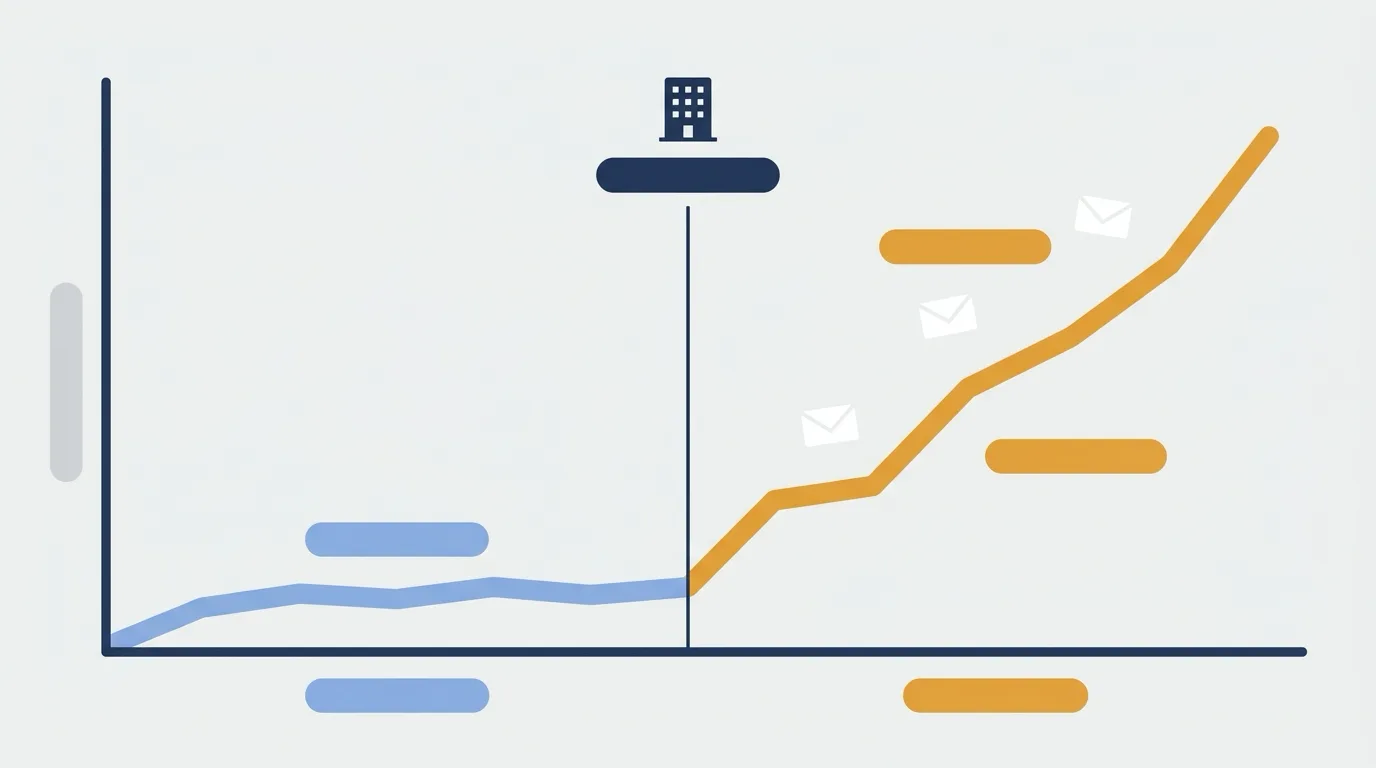
“Ideal” Patterns for Connecting Your Website and Social Media
Create a Path from Social Media → Website → Inquiry
When running both a website and social media, the most effective approach is a path that “sparks interest on social media, explains in detail on the website, and leads to an inquiry.”
Here are some specific patterns for connecting them.
Pattern 1: Social media post → leading to a blog article
Post a summary of a topic on social media and add a link saying “We explain this in detail on our blog.” Within the blog article, guide readers to your service pages or inquiry form.
Pattern 2: Social media post about results and case studies → leading to a case study page
Share project examples or results on social media and guide people to the track record page on your website with “See more case studies here.”
Pattern 3: Social media post with customer testimonials → leading to a service page
Share feedback you’ve received from customers on social media and guide people to the service’s detail page.
Use Your Website Content as “Material” for Social Media
We also often hear, “I don’t know what to post on social media.”
In fact, simply adapting your website content for social media means you’ll never run out of things to post.
- Summarize the key points of a blog article in three lines and post them on social media
- Pick out your service’s features one at a time and introduce them
- Take up frequently asked questions one at a time and answer them
If your website content is rich, social media posts come naturally. This is also one of the reasons to build your website first.
Summary | A Website Is “Essential,” Social Media Is an “Accelerator”
Here are the key points of this article.
- A website is stock media and social media is flow media. Their roles are fundamentally different
- About 80% of business owners feel that “companies with a website are more trustworthy”
- Consumers follow the behavior pattern of “discover on social media → confirm on the website”
- With social media alone, you keep missing new customers from search
- The order small businesses should follow is “website → social media”
- Connecting your website and social media multiplies your customer acquisition results
To be honest, running social media requires flair and persistence, and it often takes time to produce results. A website, on the other hand, is a salesperson that, once built, keeps introducing your company on your behalf 24 hours a day, 365 days a year.
First set up the “foundation” of a website, then add the “accelerator” of social media on top of it. Just keeping this order in mind will make a big difference in the results of your digital efforts.
If you’re thinking, “I want to build a website but don’t know where to start,” or “I’d like advice on connecting a website and social media,” please feel free to contact us. We’ll propose the best plan for your company’s situation.
Web制作・システム開発は
First CHにお任せください
「こんなWebサイトが欲しい」「このシステムは実現できる?」——
現役エンジニアが直接お話を伺い、最適な進め方をご提案します。
「まだ構想段階」「費用感だけ知りたい」というご相談も歓迎です。







